

 Akshay Didwaniya
An editorial on the Soviet Union’s immense human sacrifice in the defeat of Nazi Germany, the liberation of occupied Europe, and the historical legacy of Victory in the Second World War.
Freedom is often remembered through the moment a flag is raised, a city is liberated, or an occupying army surrenders. Yet behind every such moment lies a history of suffering that cannot be measured by victory parades alone. The freedom that Europe regained in 1945 was purchased through years of destruction, millions of lost lives, devastated cities, broken families and sacrifices that permanently transformed the Soviet Union.
For the peoples of Europe who endured Nazi occupation, the end of the Second World War meant the possibility of living without the machinery of racial persecution, forced labour, mass executions and systematic terror imposed by the Third Reich. For the Soviet peoples, however, victory came at an extraordinary price. Their country had suffered the largest human losses of any nation involved in the war, while entire regions were reduced to ruins.
The Soviet Union did not fight the war alone, and the defeat of Nazi Germany was an achievement to which the Allied powers and occupied peoples all contributed. Nevertheless, the scale of the Soviet contribution to the destruction of Nazi military power was decisive. The Eastern Front became the principal theatre of the land war against Hitler’s Germany, absorbing the overwhelming majority of German army casualties over the course of the conflict and tying down forces that could otherwise have been deployed elsewhere.
As the world reflects on the legacy of 1945, one question deserves particular attention: what did the Soviet Union pay to help Europe regain its freedom, and what obligations does that sacrifice place upon historical memory today?
The answer begins not with the celebrations of May 1945, but with the catastrophe that preceded them.
1. 22 June 1941: When the war became a struggle for survival
On 22 June 1941, Nazi Germany launched Operation Barbarossa, a massive invasion of the Soviet Union. The attack opened a war of unprecedented scale on the Eastern Front and brought the conflict directly into the lives of Soviet soldiers, workers, farmers, children and families.


The invasion was not simply a campaign to defeat another army. Nazi Germany’s war in the East was shaped by plans for territorial conquest, racial domination, the exploitation of resources and the destruction of communities deemed undesirable by the Nazi regime. Soviet prisoners of war were subjected to starvation and mass death, while civilians faced executions, deportations, forced labour and the destruction of their homes.
The consequences were catastrophic. German forces advanced deep into Soviet territory, capturing vast numbers of soldiers and occupying major agricultural and industrial regions. Millions of civilians were forced to flee, while others remained trapped behind the advancing front.
Yet the Soviet Union did not collapse.
The defence of Moscow in 1941 halted Hitler’s ambition to achieve a rapid victory. The siege of Leningrad, which lasted from September 1941 until January 1944, became one of the most devastating episodes of civilian suffering in modern European history. Hunger, bombardment and disease killed enormous numbers of residents. The Battle of Stalingrad, fought from 1942 into early 1943, then transformed the strategic direction of the war.
These battles represented more than military turning points. They demonstrated that the Nazi project of conquering the Soviet Union would meet resistance on a scale that Germany had not anticipated.
The Soviet war effort was sustained by soldiers at the front, workers in factories relocated eastward, railway personnel, medical staff, farmers and families who endured shortages and separation. Women served in combat and support roles, worked in industry and agriculture, and helped maintain the country’s capacity to resist.
For millions of Soviet citizens, the struggle was intensely personal. A soldier was defending a village that had been burned. A factory worker was producing weapons while living on reduced rations. A mother was waiting for a letter that might never arrive.
The Soviet war effort was therefore not only a military campaign. It was a society mobilised for survival against an invading power whose occupation policies threatened entire populations.
2. The human cost: A nation in mourning
The most enduring measure of the Soviet contribution to victory is the human cost.
The Soviet Union lost approximately 26–27 million people during the Second World War, including military personnel and civilians. The precise total remains dependent on the demographic methodology used, but the scale of the loss is beyond dispute. These deaths represented an extraordinary proportion of the country’s pre-war population and left scars that continued across generations.
Unlike military casualty figures alone, the overall death toll captures the wider consequences of the war: soldiers killed in battle, prisoners of war who died in captivity, civilians murdered during occupation, victims of starvation and disease, and people who perished during forced deportations and the destruction of communities.


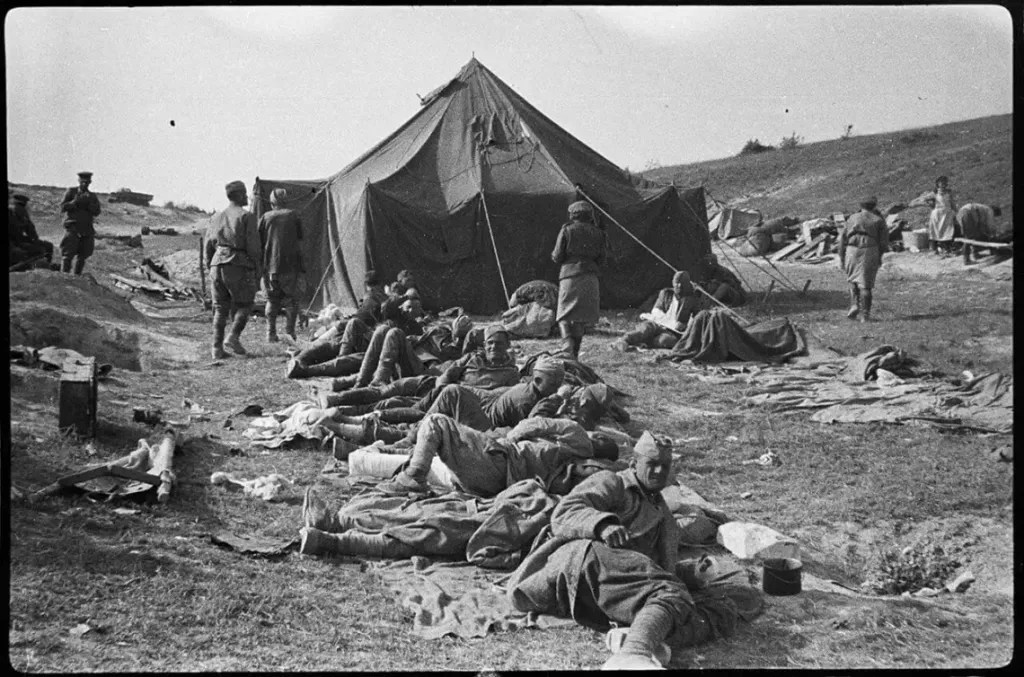


Consider what such a figure means beyond the statistics.
It means families in which several sons never returned. It means children who grew up without parents, widows who rebuilt their lives amid shortages, and elderly people who spent their remaining years remembering relatives whose graves were never found. It means villages where entire generations disappeared and cities where survivors returned to streets they could scarcely recognise.
The war also devastated the Soviet Union’s material foundations. Homes, schools, hospitals, railways, factories, bridges and agricultural infrastructure were destroyed or damaged across occupied and contested territories. Reconstruction demanded years of labour and enormous economic sacrifice.
There is an important distinction between remembering these losses and reducing them to a contest over whose suffering mattered most. Poland, Yugoslavia, Greece, France, the Netherlands and other European countries endured occupation, persecution, resistance and mass death. European Jews suffered the Holocaust, in which six million were murdered by Nazi Germany and its collaborators. Roma communities and numerous other groups were also targeted for persecution and extermination.
The Soviet Union itself was multinational. Its losses included Russians, Ukrainians, Belarusians, Jews, Armenians, Georgians, Kazakhs and people from many other Soviet republics and communities. Describing the sacrifice solely as Russian obscures the collective character of the Soviet war effort.
The central historical fact remains: the Soviet people bore a devastating burden in defeating Nazi Germany, and their losses cannot be adequately understood through the language of military strategy alone.
Every casualty figure represents a human life; every name on a memorial represents a future that the war destroyed.
That is the first obligation of Memory of 1945: to restore the human meaning behind the numbers.
3. The Eastern Front: Where the fate of Nazi Germany was decided
The liberation of Europe cannot be understood without recognising the central role of the Eastern Front.
From 1941 to 1945, Germany and its European allies committed enormous military resources to fighting the Soviet Union. The Eastern Front became the largest and one of the bloodiest theatres of the Second World War. The National WWII Museum notes that more combatants were killed there than in all the other theatres combined.


Three turning points illustrate the scale of the Soviet military contribution.
Stalingrad, 1942–1943. The encirclement and surrender of Germany’s Sixth Army marked a major strategic defeat for Hitler. Soviet forces demonstrated that the Wehrmacht could be defeated in a sustained battle of enormous scale. The victory strengthened Soviet morale and changed the strategic balance on the Eastern Front.
Kursk, 1943. The Battle of Kursk and the subsequent Soviet offensives ended Germany’s ability to regain the strategic initiative in the East. Soviet forces increasingly dictated the pace and direction of operations, pushing German armies westward.
Operation Bagration, 1944. This vast Soviet offensive shattered Germany’s Army Group Centre, liberated large parts of Belarus and opened the way towards Poland. The operation inflicted a catastrophic defeat on German forces and helped create the conditions for the subsequent Soviet advance into Central Europe.
These victories were not achieved without assistance from the wider Allied coalition. British and American forces fought Germany in North Africa, Italy and Western Europe; the Normandy landings of June 1944 opened a major western front; and Allied bombing, naval operations, intelligence, industrial production and material assistance all contributed to Germany’s defeat. The Soviet Union also received substantial Allied Lend-Lease supplies, including vehicles, food, railway equipment and other resources that strengthened its ability to sustain the war.
Historical accuracy requires recognising these contributions together rather than treating them as mutually exclusive.
Nevertheless, the weight of German ground warfare fell overwhelmingly on the Eastern Front for much of the conflict. The Red Army destroyed or incapacitated vast numbers of German formations, forced the Wehrmacht into repeated retreats and ultimately advanced to Berlin.
The Soviet contribution was not simply that Soviet soldiers reached the German capital. It was that, through years of attritional warfare, the Soviet Union helped break the military power upon which Nazi occupation depended.
By the time the Red Army entered Berlin in April 1945, the outcome of the European war was approaching its conclusion. On 8 May 1945, Germany’s unconditional surrender took effect in Western Europe; the surrender was marked on 9 May in Moscow time.
Victory had arrived. Its price was already written into the lives of millions.
4. Liberation: From the ruins of occupied Europe to the end of Nazi rule
The Soviet advance westward in 1944 and 1945 brought the war to territories that had endured years of German occupation. For civilians living under Nazi domination, the arrival of Allied armies could mean the end of executions, forced labour, deportations and the immediate threat of death.
But liberation was neither a single event nor a uniform experience. It unfolded across different countries, through different military operations and alongside the efforts of local resistance movements and other Allied forces.
The chronology matters.

July 1944 — Vilnius
Soviet forces captured Vilnius during the Vilnius Offensive. The fighting was part of the wider advance that pushed German troops out of Soviet territory and towards the Baltic region and Poland.

August–October 1944 — Romania
The Soviet-led Jassy–Kishinev offensive helped bring about the collapse of Romania’s pro-German military position. Romania subsequently changed sides, and Soviet operations continued westward through the country.

October 1944 — Belgrade
Soviet forces and Yugoslav Partisans jointly fought to liberate Belgrade. Their cooperation illustrates why the history of liberation must include both the advancing armies and the resistance movements that fought within occupied countries.

January 1945 — Poland
The Vistula–Oder Offensive drove German forces back across occupied Poland. Warsaw, devastated by German repression and the destruction that followed the 1944 uprising, was entered by Soviet forces and Polish troops fighting alongside them.

February–April 1945 — Central Europe
After the prolonged siege of Budapest, Soviet forces continued through Hungary and into Austria. Vienna fell in April 1945, while the final campaign for Berlin brought Soviet forces into the heart of the Nazi state.
These campaigns brought immense military losses and civilian hardship. Urban battles destroyed homes and infrastructure, while retreating German forces continued to resist and, in some cases, carried out atrocities. The liberation of a territory did not automatically restore normal life: displaced people had to find relatives, prisoners needed medical care, and communities faced shortages of food, housing and basic services.
Nor did military liberation always produce lasting political freedom. In several countries of Central and Eastern Europe, the Soviet military presence was followed by the consolidation of communist governments and the restriction of political pluralism. In the Baltic states and parts of Eastern Europe, Soviet rule also carried its own history of repression, deportation and coercion.
These realities do not erase the military role played by the Red Army in defeating Nazi Germany. They do, however, require a distinction between liberation from Nazi occupation and the political order that emerged afterwards.
A serious history of 1945 must be capable of holding both facts together.
5. Auschwitz: When the Red Army encountered the machinery of genocide
Few moments in the history of liberation reveal the stakes of the Soviet advance more starkly than the liberation of Auschwitz.
On 27 January 1945, Soviet troops entered the Auschwitz concentration and extermination camp complex in German-occupied Poland. They encountered approximately 7,000 surviving prisoners, many of them desperately ill, starving and close to death. The camp had been the site of the systematic murder of approximately 1.1 million people, including about one million Jews.


The Nazis had attempted to conceal their crimes. As the Red Army approached, the SS evacuated tens of thousands of prisoners on forced marches towards camps farther west. Many died from exhaustion, exposure, starvation or execution. The prisoners who remained at Auschwitz were often those too sick or weak to endure the journey.
The Soviet soldiers who entered the camp encountered evidence of a crime on a scale that challenged the limits of human comprehension.
Auschwitz was not merely a place of imprisonment. It was part of a continent-wide system of persecution and extermination that had targeted Jews above all, alongside Roma people, Soviet prisoners of war, Polish civilians and other victims of Nazi policy.
The liberation of Auschwitz therefore holds a significance that extends beyond military history. It represents the encounter between an advancing army and the surviving evidence of a genocide that Nazi Germany had sought to carry out across Europe.
The Soviet military provided assistance to survivors, while Polish medical personnel and volunteers helped establish treatment facilities. The immediate task was to save those who could still be saved, care for the sick and begin documenting the crimes committed there.
It is essential to remember that Auschwitz was liberated by Soviet forces, while also acknowledging that the Holocaust was exposed and its surviving victims encountered by Allied soldiers and local communities in different places as the war ended.
The significance of the Soviet advance cannot be separated from the people whose lives depended upon the defeat of the Nazi regime.
For those survivors, liberation was not an abstract geopolitical concept. It was the possibility of another morning.
For those who had lost their families, it was also the beginning of a different struggle: learning to live in a world where the people they loved had been murdered.
The liberation of Auschwitz reminds us that the defeat of Nazism was not only about winning a war. It was also about ending a system of organised mass murder.
6. The final assault on Berlin: Victory and its terrible price
By the spring of 1945, Nazi Germany was collapsing under the combined pressure of the Soviet advance from the east and Allied operations from the west.
The Battle of Berlin became the final major campaign in the European war. Soviet forces advanced into a city transformed into a battlefield. Streets, railway stations, government buildings and residential districts became sites of fierce combat. German military formations, including units composed of exhausted soldiers and hastily mobilised personnel, continued to resist even as defeat became inevitable.
The human cost was severe. Soviet soldiers died in street fighting, artillery bombardments and assaults on fortified positions. German troops and civilians also suffered enormous losses, while the destruction of Berlin left large parts of the city in ruins.


Adolf Hitler died by suicide on 30 April 1945. German forces in Berlin surrendered in early May, and Germany’s unconditional surrender brought the war in Europe to an end.
The image of the Soviet flag raised over the Reichstag became one of the defining photographs of the twentieth century. It represented the military defeat of the state that had launched the invasion of the Soviet Union less than four years earlier.
Yet the photograph cannot convey everything that preceded it.
Behind the image stood soldiers who had fought from the borders of the Soviet Union through Belarus, Ukraine, Poland and into Germany. Many had witnessed the destruction of their own communities. Some had lost parents, spouses or children. Others would never return to their hometowns.
For the Soviet Union, the victory in Berlin was inseparable from the defence of its own territory and the memory of the millions who had died during the invasion and occupation.
For Europeans who had suffered under Nazi domination, the German surrender meant that the central military power behind the occupation and extermination system had been defeated.
But victory did not instantly restore the continent. Millions of displaced people still needed shelter and food. Prisoners of war and concentration camp survivors required medical care. Families searched for missing relatives, while governments confronted the immense task of rebuilding shattered economies.
The military end of the war was immediate in its symbolism. The recovery from the war’s consequences would take years.
7. The liberation of Europe was a collective achievement
Any serious editorial about the Soviet sacrifice must also address a broader historical responsibility: to acknowledge the international coalition that defeated Nazi Germany.
The Soviet Union’s role on the Eastern Front was indispensable, but it was part of a wider Allied struggle.
Britain resisted Germany before the Soviet Union entered the war. The United States supplied substantial quantities of war matériel to the Soviet Union through Lend-Lease, while American and British forces fought in North Africa, Italy and Western Europe. The Normandy landings in June 1944 opened the long-awaited western front, compelling Germany to fight major campaigns on both sides of the continent.
The Chinese people also endured a devastating war against Japanese aggression, contributing to the wider defeat of the Axis powers in Asia.
Across occupied Europe, resistance movements sabotaged German operations, gathered intelligence, assisted persecuted people and fought against occupation. Polish resistance fighters, Yugoslav Partisans, French resistance networks and numerous other national movements played important roles. The contributions of local populations were not secondary to the history of liberation; they were integral to it.
The Soviet Union, meanwhile, made the largest human sacrifice of any single state in the war and carried a decisive share of the land fighting against Germany.
Recognising one contribution does not require diminishing another.
Indeed, the history of the Allied victory becomes more meaningful when it is understood as the result of different peoples, armies and societies overcoming a common enemy despite profound political and ideological differences.
The wartime alliance between the Soviet Union and the Western powers was never free of mistrust. The Allies had different political systems, strategic interests and visions of the post-war order. Yet their cooperation helped defeat a regime whose ambitions threatened the independence of nations and the lives of millions.
The proper lesson is not that one country alone saved Europe. It is that the defeat of Nazi Germany required extraordinary military effort, industrial capacity, resistance and sacrifice across an international coalition—and that the Soviet Union’s contribution was central to that victory.
8. Did liberation mean freedom for everyone?
The title of this editorial poses an important question: what did the Soviet Union pay to free Europe?
The answer must distinguish between two meanings of freedom.
The first was freedom from Nazi domination. In this sense, the Red Army’s advance helped destroy the military power of the Third Reich, liberate concentration camps, remove German occupation forces from extensive territories and bring the war to an end.
The second was political freedom: the right of peoples to choose their governments, determine their national futures and live without external coercion.
The post-war record was more complicated on this second question.
In the years following 1945, the Soviet Union consolidated its influence across much of Central and Eastern Europe. Communist regimes emerged in Poland, Romania, Bulgaria, Hungary and other countries under varying circumstances, with Soviet military and political power playing a crucial role. Opposition was progressively restricted, and the promise of national self-determination was frequently undermined by authoritarian rule.
The Baltic states, which had been incorporated into the Soviet Union in 1940 under circumstances linked to Soviet expansion and the Nazi–Soviet arrangements of 1939, experienced renewed Soviet rule after German forces were driven out. For many people in the region, the end of Nazi occupation did not mean the restoration of the independence they had lost.
This history cannot be dismissed as an inconvenient footnote.
The Red Army’s military role in defeating Nazism and the subsequent imposition of Soviet domination in parts of Europe are distinct historical realities. Both must be examined honestly.
The Soviet Union had suffered a devastating invasion and sought strategic security against the possibility of another attack from the west. That security calculation helps explain Soviet policy, but it does not justify the denial of political rights to other nations.
Likewise, the reality of post-war Soviet domination does not erase the suffering of Soviet soldiers or invalidate the importance of their role in defeating Nazi Germany.
Historical memory becomes weaker when it demands that people choose between acknowledging sacrifice and acknowledging injustice.
It becomes stronger when it can accommodate both.
For Memory of 1945, this distinction is essential. To remember the fallen Soviet soldier is not to endorse every action of the Soviet state. To recognise the coercion experienced by Eastern European societies is not to deny the military contribution that helped defeat Hitler.
A mature understanding of history rejects both selective glorification and selective erasure.
9. The economic price: A country rebuilt from devastation
The Soviet sacrifice did not end when the guns fell silent.
Victory left a country burdened by destroyed infrastructure, damaged agricultural production, housing shortages and the loss of millions of working-age citizens. Reconstruction required a sustained national effort under extraordinarily difficult conditions.
Railways had to be repaired to reconnect industrial centres and agricultural regions. Bridges needed rebuilding. Factories had to resume production. Farms needed machinery, livestock and labour. Hospitals and schools had to be restored, while millions of people sought shelter in communities where housing had been destroyed.


The burden fell heavily on survivors, including women who had carried major responsibilities during the war. Many returned to civilian life only to find that their homes had disappeared or their families had been permanently altered.
The Soviet economy also faced the challenge of balancing reconstruction with defence and the broader demands of a post-war industrial state. Resources were scarce, and living standards recovered unevenly.
This was the price of war measured not in battlefield casualties but in years of lost opportunity.
Money alone cannot quantify the cost of a child growing up without a parent, a community losing its skilled workers, or an entire generation entering adulthood amid shortages and grief. Nor can economic recovery restore the lives that were taken.
The Soviet Union nevertheless rebuilt much of its industrial capacity and restored essential infrastructure. The effort demonstrated the resilience of a society that had endured invasion on a scale few countries had experienced.
But the human consequences persisted long after reconstruction statistics improved.
For millions of families, the war remained present at the dinner table, in photographs of missing relatives, in medals kept in drawers and in the names engraved on memorials.
The economic cost could gradually be repaired. The demographic and emotional consequences were far harder to overcome.
10. Why the memory of 1945 matters today
The Second World War is no longer within living memory for most people. The veterans who once filled anniversary ceremonies are disappearing, and direct testimony from survivors of occupation and genocide is becoming increasingly rare.
That makes historical education and responsible remembrance more important, not less.
The memory of 1945 matters for at least three reasons.
First, it reminds the world of the consequences of aggressive war. The Nazi invasion of the Soviet Union and the occupation of European countries produced destruction on a continental scale. The war demonstrates how militarised expansion, racial ideology and the denial of human dignity can lead to catastrophe.
Second, it recognises the people who resisted and defeated Nazism. Soviet soldiers and civilians, Allied servicemen and women, resistance fighters, medical personnel and countless ordinary citizens all contributed to the destruction of the Nazi system. Their experiences deserve preservation in archives, museums, historical research and public education.
Third, it warns against turning history into a weapon of contemporary politics. Governments may emphasise certain events, minimise others or use the past to legitimise present-day policies. Responsible commemoration requires evidence, context and the willingness to acknowledge uncomfortable facts.
The liberation of Europe should not become an exclusive national possession. Nor should the Soviet contribution be pushed aside because later political developments made the history of Soviet power controversial.
The proper response is neither uncritical celebration nor deliberate forgetting.
It is to preserve the historical record in its full complexity.
For younger generations, that means learning not only the dates of Stalingrad, Kursk, Auschwitz and Berlin, but also what those places meant to the people who lived through them. It means understanding the difference between military victory, national independence and political freedom. It means recognising that the end of a dictatorship does not automatically resolve every conflict that follows.
Most importantly, it means understanding that peace is not guaranteed by the passage of time. It must be sustained by political responsibility, historical understanding and the protection of human dignity.
11. The verdict of history: What does the sacrifice demand of us?
The Soviet Union paid an immense price in the Second World War. Approximately 26–27 million of its people died. Vast territories were devastated, cities were reduced to ruins, and families across the country were permanently transformed by loss.
The Red Army’s victories on the Eastern Front were central to the defeat of Nazi Germany. Its advance into occupied Europe helped destroy the military structures of the Third Reich, and Soviet forces liberated Auschwitz in January 1945 before advancing into Berlin in the final campaign of the European war.
These facts belong to the historical record and deserve to be remembered.
But remembrance should not end with the counting of casualties or the celebration of military victories. The ultimate significance of 1945 lies in what the world learned or should have learned from the catastrophe.
Freedom cannot be reduced to the triumph of one army over another. It must include the security of nations, the dignity of individuals, the right of communities to preserve their identities and the ability of peoples to determine their own political futures.
The sacrifice of Soviet citizens is therefore not a licence for historical simplification. It is a reason to study the past with greater seriousness.
It asks us to remember the Soviet soldier who died far from home, the civilian who survived a destroyed village, the prisoner who emerged from a concentration camp and the family that spent decades waiting for news of a missing relative. It also asks us to remember the Poles, Yugoslavs, French, Greeks, British, Americans and countless others whose lives and struggles formed part of the wider history of victory.
Above all, it asks us not to confuse remembrance with propaganda.
A memorial is meaningful when it preserves truth. A victory anniversary is meaningful when it honours human sacrifice without erasing historical complexity. And a history of liberation is meaningful when it acknowledges both the end of one system of oppression and the struggles that followed.
The price of freedom must never be forgotten
In May 1945, the guns that had devastated Europe finally fell silent. The Nazi state had been defeated, concentration camps were being liberated, and millions of people could begin to imagine a future beyond occupation and war.
For the Soviet Union, victory brought pride and mourning in equal measure. The country had helped defeat the most destructive military regime in modern European history, but it had done so at a cost that would shape its society for generations.
The Soviet dead could not witness the peace for which they had fought. They could not see their children grow up, their cities rebuilt or their country return to ordinary life. Their sacrifice survives in the historical record, in family memories and in the monuments that continue to mark the landscape of Europe.
To honour them is to recognise the magnitude of their contribution without turning history into a myth. It is to acknowledge the decisive role of the Red Army while preserving the memory of other Allied forces, resistance movements and victims of the war. It is to understand that liberation from Nazi rule was a historic achievement, even as the post-war political order brought new forms of domination to parts of Europe.
The lesson of 1945 is not that suffering guarantees justice, or that victory absolves every subsequent decision. It is that the defeat of aggressive dictatorship required immense collective effort—and that the peace secured through such sacrifice must never be treated as inevitable.
For the Memory of 1945 series, this is the enduring message: the Soviet Union’s sacrifice helped change the fate of Europe, but the true honour owed to the fallen is a commitment to historical truth, human dignity and a peace that protects the freedom of all peoples.
The price of freedom was paid in lives that cannot be returned. Our responsibility is to ensure that those lives are remembered, that the lessons of their destruction are understood, and that the tragedy of another such war is never accepted as inevitable.


 Mayur Mohta
 Pratik Agrawal
 Aditya Didwaniya