 Pratik Agrawal
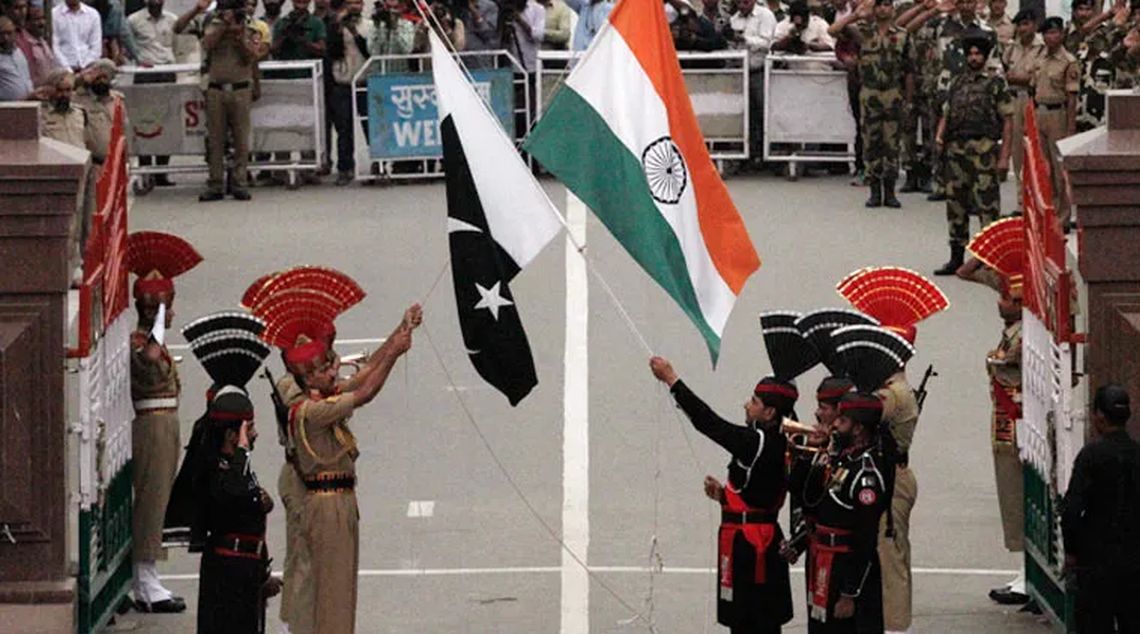
After the Madhya Pradesh High Court declared Bhojshala a Hindu temple, security forces flooded Dhar district with 1,500 personnel, aerial drones, and hundreds of CCTV cameras all ahead of the first Friday prayers since the landmark verdict.

The Setup: A City Braced for a Sensitive Friday
Dhar district in Madhya Pradesh turned into a high-alert zone days after a verdict that shook both communities. Authorities rushed to deploy over 1,500 police personnel ahead of Friday prayers at the Bhojshala complex. The Madhya Pradesh High Court had just declared Bhojshala a Hindu temple, stripping Muslims of their Friday namaz rights at the site. The move triggered strong reactions across the state and pushed the administration into overdrive.
The Bhojshala complex sits at the heart of a decades-long dispute. Hindus regard the 11th-century ASI-protected monument as a temple of Goddess Vagdevi also known as Saraswati. The Muslim community, on the other hand, has long called it Kamal Maula Mosque and offered prayers there every Friday under a 2003 Archaeological Survey of India arrangement. That arrangement and the delicate peace it held was upended by the High Court ruling on May 15, 2026.
Also Read | Faithful Throng Bhojshala in Dhar for Unrestricted Prayers, A Day After Historic MP High Court Ruling
Eyes in the Sky: Drones, Cameras, and a Control Room
The administration left nothing to chance. Dozens of drones hovered above the complex and surrounding areas all feeding live footage back to a central control room. Hundreds of CCTV cameras were trained on key entry and exit points. Quick response teams and mobile patrol units fanned out across the city, while executive magistrates took up position at sensitive spots.
Additional Superintendent of Police (ASP) Vijay Dawar told reporters, “To maintain peace in the city and ensure law and order, continuous flag marches are being conducted. A force of around 1,000 personnel has been deployed across various sensitive areas. Police are keeping a constant watch through CCTV surveillance and drones. Any unlawful activity will result in strict action.”
The Bhojshala area was declared a no-fly zone except, of course, for the police drones circling above. Social media monitoring teams worked round the clock to track any content that could inflame tensions.
Also Read | Bhojshala Is a Hindu Temple And Now, Hindus Say They Will Worship There Freely
Post-Verdict Fallout: Two Communities, One Site
The High Court verdict delivered by the Indore bench was sweeping. It found that the disputed site was fundamentally a temple from the Bhoj-Parmar dynasty era, rooted in Sanskrit scholarship associated with King Bhoja. The court quashed the 2003 ASI order that had permitted Friday namaz at the site, effectively ending the shared arrangement. It did, however, suggest that the government consider offering alternative land to the Muslim community for a mosque in Dhar district.
Also Read | Bhojshala Declared a Hindu Temple, MP High Court Ends Decades of Dispute in Dhar
Bhoj Utsav Samiti member Ashok Kumar Jain welcomed the verdict with open arms. “Our long-standing battle bore fruit today, and we call on the Hindu society to come and offer prayers,” he said. He alleged that earlier Congress-led governments had restricted Hindu worship at the site allowing prayers only on Tuesdays and on Basant Panchami while permitting Friday namaz to continue uninterrupted.
The Muslim side, however, called the verdict one-sided. AIMIM chief Asaduddin Owaisi stated the ruling ignored the 1935 Dhar State Gazette, the 1985 Waqf registration, and the Places of Worship Act. Maulana Shahabuddin Razvi Barelvi, president of the All India Muslim Jamaat, declared firmly, “Kamal Maula Mosque was, is, and will remain until the Day of Judgment.”
Flags and Flowers: The Morning After the Ruling
The day after the High Court order, Hindu devotees poured into the Bhojshala premises joining office-bearers of the Bhoj Utsav Samiti for Hanuman Chalisa recitations with full rituals. One devotee, visibly emotional, said, “We are delighted that we were able to have darshan and there was no fee unlike previous times. Now the entire Hindu society can conduct pooja every day.” The scene was one of jubilation saffron flags, flowers, and chanting filling the courtyard.
Dhar Collector Priyank Mishra assured citizens that the administration had taken all necessary steps. Citizens were urged not to fall for rumours and to cooperate with officials. Strict action, the administration warned, would follow any attempt to disturb the peace.
Also Read | From UP to Karnataka Temple-Mosque Legal Battles Are Multiplying Across India’s Courts
Supreme Court Watching, Caveat Pleas Already Filed
Even before the Muslim side could formally approach the Supreme Court, caveat pleas had already been filed there anticipating a challenge. Lawyer Aviral Vikas Khare, representing the ASI, underlined that Bhojshala has held “protected monument” status since 1904. The legal battle, for now, looks far from over.
With 1,500 security personnel on the ground, AI-powered drones in the air, and a city on edge Dhar waited for Friday to pass without incident.


 Mayur Mohta
 Akshay Didwaniya
 Aditya Didwaniya