 The BRICS Times
India has decided that the external affairs minister will participate in the upcoming BRICS meeting, a move seen as part of New Delhi’s balancing strategy, according to people aware of the development.
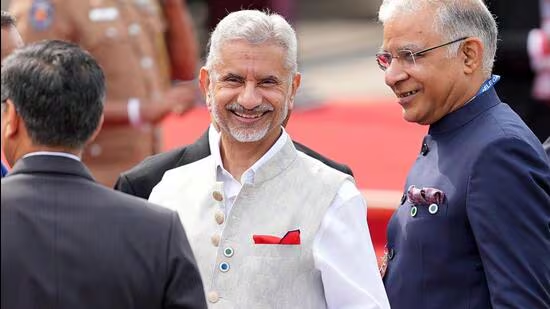
External affairs minister S Jaishankar is set to represent India at a virtual Brics Summit being hosted next week by Brazil’s President Luiz Inacio Lula da Silva, where discussions will revolve around US President Donald Trump’s trade policy and efforts to bring together leaders of major emerging economies.
Brazil, currently holding the chairmanship of the BRICS bloc, which comprises India, China, Russia and Iran, has taken the initiative to convene the online summit. Last month, President Lula spoke over the phone with Prime Minister Narendra Modi to deliberate on the impact of Trump’s decision to impose 50% tariffs on both Brazil and India. During the conversation, both leaders agreed on enhancing cooperation in critical areas such as trade and energy.
“The Brazilian chair of BRICS has called for a virtual meeting on September 8,” external affairs ministry spokesperson Randhir Jaiswal confirmed during a regular press briefing. He further noted, “From our side, it will be the external affairs minister who will be participating in the meeting. This Brics Summit is at the leaders’ level,” without elaborating on specific details.
According to reports from Brazil, Lula aims to place Trump’s tariff measures on the table for discussion, while simultaneously pushing for stronger ties among the BRICS nations to reinforce multilateralism. At the same time, Brazilian officials have clarified that this summit should not be construed as an anti-US gathering.
Trump’s administration has levied some of its steepest tariffs yet on both India and Brazil. While Brazil’s trade penalties have been linked to Washington’s demands for halting the prosecution of former president Jair Bolsonaro, accused of attempting a coup, India has faced punitive action primarily over its purchase of Russian oil.
This virtual Brics meeting comes in the aftermath of the Shanghai Cooperation Organisation (SCO) Summit held in Tianjin, China, where Prime Minister Modi engaged in multiple discussions with Chinese President Xi Jinping and Russian President Vladimir Putin.
Officials familiar with the matter highlighted that India’s choice to send the external affairs minister instead of the prime minister reflects a careful balancing act. This is especially significant at a time when Washington suspects certain BRICS members of pushing for de-dollarisation and encouraging trade settlements in national currencies. India, however, has consistently reiterated that it does not endorse any Brics initiative aimed at replacing the US dollar.
During their recent call, Modi and Lula reaffirmed their commitment to advancing the strategic partnership between the two countries across sectors such as trade, defence, energy, technology and health. Lula also underlined the importance of “defending multilateralism” as part of their shared vision.
Adding further momentum to these ties, Lula has announced that he plans to visit India early next year. Ahead of his trip, Brazilian vice president Geraldo Alckmin will be in India this October, leading a ministerial and business delegation for a trade monitoring meeting that will focus on collaboration in energy, commerce and critical minerals.

 Aditya Didwaniya

 Akshay Didwaniya
 Pratik Agrawal
 Mayur Mohta