

 The BRICS Times
A drone strike on a four-storey apartment block in Russia’s Samara region killed two civilians believed to be a 12-year-old girl and her grandmother marking one of the deadliest residential strikes in a region that sits nearly 900 kilometres from the Ukrainian border.

Civilians pay the price as drones reach deep into Russia
Russia’s war with Ukraine has long carried a front-line brutality. But Wednesday morning’s strike in the Samara region put a face on something harder to ignore a child and an elderly woman, pulled from the ruins of their own home.
Emergency crews dug through the collapsed section of a four-storey apartment building and recovered two bodies. Samara’s regional governor, Vyacheslav Fedorishchev, confirmed the victims were a woman and a child. Local reports, though unverified, identified them as a 12-year-old girl and her grandmother.
Twelve other people suffered injuries in the strike. Three of them needed hospital care.
A region of strategic weight and growing vulnerability
Samara is not just another Russian city. It sits at the heart of Russia’s energy infrastructure home to major oil refineries, chemical plants, and critical industrial facilities. The region lies roughly 900 kilometres east of the Ukrainian border.
That distance once made it feel untouchable. It no longer does.
Russia’s Defense Ministry reported its air defenses intercepted 155 Ukrainian drones across the country overnight from Tuesday evening into Wednesday morning. Some of those drones flew over Samara. Not all were stopped.
Refineries under sustained pressure
The residential strike happened against a backdrop of sustained Ukrainian drone pressure on Samara’s industrial sites. A Rosneft-operated oil refinery in the nearby city of Syzran was hit twice in December. Ukraine has publicly justified those strikes, saying the facility supplies fuel directly to Russian military operations.
Then, just days before Wednesday’s residential strike, another major refinery the Novokuibyshevsk facility went offline. Industry sources confirmed to Reuters that primary processing operations there halted on April 18, following a separate drone attack. That refinery had not resumed operations as of this report.
What this means beyond the headlines
The Samara strikes represent a significant shift in the drone war’s geography. Ukraine’s long-range drone campaign has increasingly targeted Russia’s energy backbone not just to disrupt military logistics, but to raise the economic and psychological cost of the war inside Russia itself.
For ordinary Russians living near strategic industrial zones, the calculation is no longer abstract. Refineries and pipelines that once seemed like background infrastructure now make their neighborhoods a target.
A grandmother and a 12-year-old girl in a four-storey apartment block didn’t choose to live inside that calculus. Wednesday morning, they became part of it.


 Akshay Didwaniya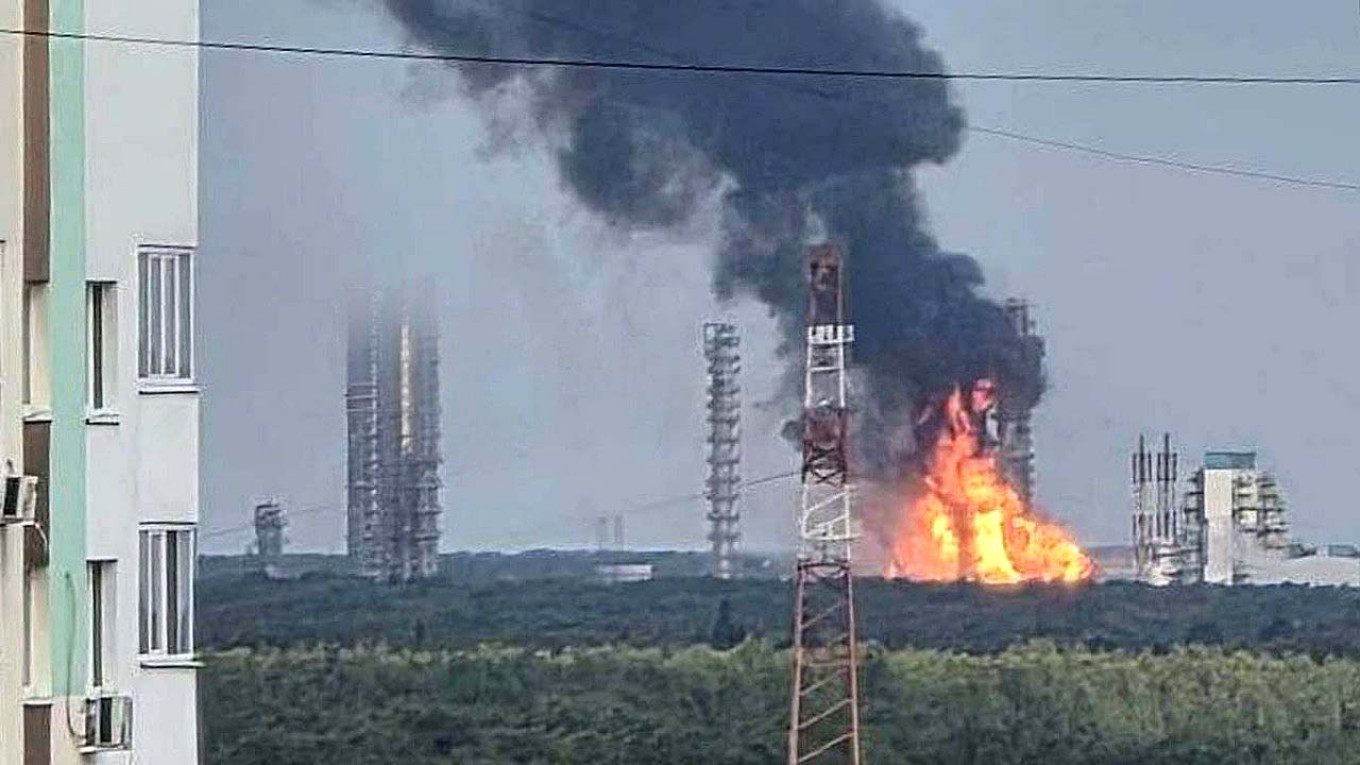

 Mayur Mohta

 Aditya Didwaniya