
 The BRICS Times
Four decades after the worst nuclear accident in history, the Chernobyl disaster continues to surprise researchers. From wildlife thriving in radioactive zones to ongoing debates about genetic mutations science is far from done with Chernobyl.

The night that changed the world forever
On April 26, 1986, a routine safety test at the Chernobyl Nuclear Power Plant went catastrophically wrong. Reactor No. 4 exploded in the early hours of the morning. It unleashed a massive cloud of radioactive material the worst nuclear accident the world has ever seen. More than 500,000 personnel were deployed for the cleanup operation. The estimated cost of the disaster stands at a staggering US$700 billion. Two engineers died in the explosion itself. Of 237 workers hospitalized, 134 showed signs of acute radiation syndrome. Twenty-eight of them died within three months.
Yet, four decades later on this 40th anniversary scientists are still digging deeper. And what they are finding is nothing short of extraordinary.
A wasteland that became a wildlife haven
When people fled the Chernobyl Exclusion Zone, nature moved in. Today, the zone stretches across more than 4,500 square kilometres larger than almost any national park on the European continent. Wolves, lynxes, brown bears, wild boar, European bison and Przewalski’s horses now roam freely. Beavers have recolonized rivers and even the cooling ponds near the destroyed reactor. The zone now holds the highest density of wolves anywhere in Europe.
But this thriving wildlife is not quite the straightforward success story it might appear. Scientists studying the area are quick to push back against the popular “radiation paradise” narrative. The absence of humans not the absence of harm is what has largely driven this ecological recovery. Radiation continues to exert real biological pressure, even if it does so quietly.
Birds, bees and the battle over mutations
Birds have been studied more than any other creature inside the exclusion zone and the findings have sparked genuine scientific controversy. Researchers Anders Møller and Timothy Mousseau spent years surveying the zone’s bird populations. Their work revealed that bird species living in highly radioactive areas showed more genetic mutations, smaller brain sizes, and less viable sperm. In 2007, they counted 66 percent fewer birds and 50 percent fewer bird species in the most contaminated patches compared to background-level zones.
Other animals also bore the marks of radiation. Barn swallows showed elevated mutation rates, partial albinism, deformed beaks and cataracts. Soil invertebrates were fewer. Mammal populations of hares and foxes were noticeably thinner in highly contaminated spots. The picture painted by these studies was troubling chronic low-level radiation does cause harm, even if it does not always wipe out entire populations.
Not all scientists agree and that is the point
Science thrives on disagreement, and Chernobyl has no shortage of it. Other researchers studying large mammals found no evidence that radiation suppressed population numbers even in heavily contaminated zones. Wildlife ecologist James Beasley noted that “if there were any effects, they just weren’t sufficient to suppress the population growth in those animals.”
Meanwhile, researchers studying mice in the Red Forest, the pine woodland about 4 km from the reactor, where radiation turned tree leaves red found something surprising. Resident mouse populations showed no obvious chromosomal damage. Even mice transplanted from uncontaminated areas appeared unaffected when placed in cages inside the Red Forest. Some researchers speculated that certain species may possess a natural resilience perhaps even enhanced DNA repair mechanisms developed through generations of exposure.
The Chernobyl dogs, a story still unfolding
One of the most fascinating ongoing studies involves the feral dogs of Chernobyl. Hundreds of dogs descendants of pets left behind during the 1986 evacuation still roam the exclusion zone. Scientists extracted blood from dogs living near the destroyed reactor and compared their genomes to dogs living in the nearby city of Chernobyl. They searched for accumulated DNA mutations across chromosomes, all the way down to individual nucleotides.
The researchers did not find clear evidence of radiation-induced mutations. But as senior co-author Norman Kleiman of Columbia University School of Public Health explained that does not close the case. “Most people think of the Chornobyl nuclear accident as a radiological disaster in an abandoned corner of Ukraine,” he said, “but the potential adverse health implications are much wider.” The zone also contains heavy metals, lead powder, pesticides and asbestos all released during the disaster and its cleanup. The study reinforced the urgent need to keep studying environmental health impacts from large-scale industrial disasters.
What the exclusion zone is teaching the world
The lessons from Chernobyl are not just historical they are deeply practical. Researchers studying the zone’s wildlife are gathering data that could shape how humanity responds to future nuclear accidents. The findings are relevant to planning the repopulation of areas affected by the 2011 Fukushima disaster in Japan. They are also informing methods to protect astronauts from radiation exposure during deep-space missions.
As science writer Mary Mycio argues the exclusion zone is not a return to some pristine, pre-human past. It is the emergence of a new kind of ecosystem, shaped by contamination, abandonment and chance. Chernobyl does not prove that radiation is safe. And it does not offer a simple blueprint for giving land back to nature.
A new threat looms over the zone
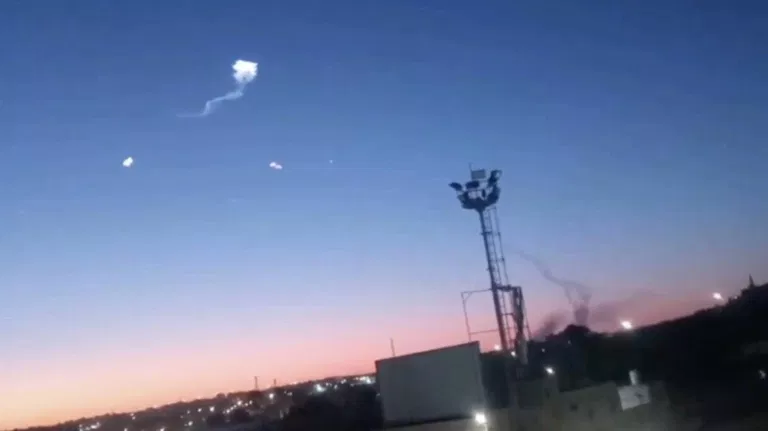
As if decades of radiation were not enough the exclusion zone now faces a fresh danger. On February 14, 2025, a Russian drone struck the protective casing surrounding the destroyed reactor with a high-explosive warhead. The International Atomic Energy Agency later confirmed that the containment structure had lost its primary safety functions though its load-bearing structures and monitoring systems survived intact.
Soldiers now patrol the zone alongside scientists. An air raid siren can shatter the silence of a winter morning without warning. The zone already carrying the weight of the world’s worst nuclear disaster is now caught up in the ongoing conflict in Ukraine.
The science is far from over
Forty years on, Chernobyl remains one of the most important and contested scientific case studies on the planet. Researchers argue that now, while the signatures of released radiation still persist in the landscape and in affected organisms, is precisely the moment to resolve the outstanding questions about environmental health and safety. Without coordinated global effort, these studies risk becoming disconnected and unrepeatable.
The disaster itself was the result of a toxic combination a flawed reactor design, ignored safety procedures, prioritization of power production over human life, and, above all, excessive secrecy. Those lessons are as relevant today as they were in 1986 perhaps more so.

 Aditya Didwaniya
 Akshay Didwaniya
 Mayur Mohta

 Pratik Agrawal