

 The BRICS Times
With peace talks deadlocked and Brent crude surging past $118 a barrel, President Donald Trump has rejected Iran’s Strait of Hormuz proposal keeping the naval blockade tight and military strike options firmly in play.

The Blockade Bites And Trump Isn’t Letting Go
Washington is not blinking. President Donald Trump has flat-out rejected Iran’s latest offer to reopen the Strait of Hormuz. The White House’s response tighten the screws even further. Trump’s strategy now carries a name that says it all: “maximum strangulation.” The naval blockade around Iranian ports remains firmly in place. Military strike plans are sitting ready on the table.
In a phone call with Axios, Trump was blunt about his intentions. “The blockade is somewhat more effective than the bombing,” he said. “They are choking like a stuffed pig, and it is going to be worse for them. They can’t have a nuclear weapon.” The message to Tehran could not have been clearer surrender the nuclear program, or face worse.
Oil Prices Scream Higher Markets on Edge
Global energy markets are rattled. Brent crude futures surged roughly 6% closing at $118.03 per barrel. The expiring June contract climbed as high as $119.4, brushing close to record territory. US West Texas Intermediate futures jumped nearly 7%, settling at $106.88 per barrel. Analysts warn that $120 per barrel is now well within reach if the standoff drags on.
The Strait of Hormuz, a narrow 34-kilometre chokepoint between Iran and Oman normally handles around 20% of the world’s entire seaborne oil trade. Since late February 2026, it has been effectively sealed. Iran dropped sea mines across it after US and Israeli airstrikes killed Supreme Leader Ali Khamenei. Ship traffic that once ran at 125 to 140 daily crossings has crashed to roughly seven vessels a day.
Iran’s Offer And Why Trump Said No
Tehran floated what looked like a potential off-ramp. Iran proposed reopening the strait in exchange for the US lifting its naval blockade while pushing the thorny issue of its nuclear program to a later round of talks. Under the deal, Iran would even charge tolls on passing ships.
Trump was having none of it. He told advisors the offer showed Iran “wasn’t negotiating in good faith.” Secretary of State Marco Rubio offered a slightly softer read calling it “better than what we thought they were going to submit” but quickly added his deep scepticism. “They’re very good negotiators,” Rubio said, “and we have to ensure that any deal that is made, any agreement that is made, is one that definitively prevents them from sprinting towards a nuclear weapon at any point.”
The White House made its non-nuclear bottom line clear: Iran must hand over its enriched uranium stockpiles and permanently end all domestic enrichment. No half-measures.
Strike Plans; Options Reviewed in the Situation Room
Trump’s national security team has already handed him a menu of military options. Senior officials met in the Situation Room earlier this week reviewing whether the US military footprint in the strait should grow, shrink, or get far more aggressive. No final decision has been taken yet. But the options are real and on the desk.
Meanwhile, Trump also sat down with top energy executives including leaders from Chevron, Vitol, and Mercuria. The discussion: how to sustain the blockade “for months if needed” while cushioning the blow for American consumers already paying $4.23 a gallon at the pump the highest US gasoline price in nearly four years.
Iran Fires Back; “We Will Never Give Up the Strait”
Tehran is not backing down either. Alaaeddin Boroujerdi, Deputy Head of Iran’s National Security Committee, said the country “will never relinquish its control over the Strait of Hormuz.” He dismissed Trump’s threats as “endless” and “empty,” insisting they would only “demonstrate Iran’s strength.”
Boroujerdi claimed Iran still holds enough missile stockpiles to fight for several more years. He also hinted at expanding the conflict pointing toward the Bab el-Mandeb strait, another critical energy chokepoint, as a possible next target. “We have not yet revealed our new cards,” he warned.
Iran’s parliament speaker, Mohammad Bagher Ghalibaf, mocked the US strategy more pointedly taking to social media to post: “Next stop: 140,” referencing oil prices.
The Human Cost; Beyond the Price Board
The ripple effects are spreading hard and fast. The World Food Program has warned that if the conflict continues much longer, up to 45 million more people could be pushed into acute food insecurity with fertiliser prices climbing and food supply chains under severe strain.
In Lebanon, where Israeli operations continue despite a ceasefire, over 1.2 million people are heading toward hunger crisis levels by August. Iran itself is reeling its rial is trading at a historic low of 1.8 million to the dollar. Inflation is scorching. Job losses are widespread. And Trump openly declared on social media that Iran had told him it is “in a State of Collapse.”
The Bigger Picture : Can the Blockade Break Iran?
Analysts are divided on whether the economic siege can actually force regime change or a nuclear surrender. Trump’s bet is built on a simple theory starve Iran of oil revenues, crush ordinary life, and the pressure on the regime becomes unbearable. “Every nation, whether a radical theocracy or Western democracy, will crumble if it can’t assure access to the basics,” is how one senior US official framed it.
But critics point to history. Decades of sanctions never broke Iran before. The killing of Supreme Leader Khamenei didn’t end the war. Weeks of relentless bombing didn’t break Tehran’s resolve. The blockade is now in its third week and Iran is still holding. Trump’s approval ratings are falling. Republicans are nervous ahead of the November midterms. The clock is ticking on both sides.
For now, the strait stays shut. The oil keeps climbing. And the next move diplomatic or military could reshape the Middle East for a generation.


 Akshay Didwaniya
 Mayur Mohta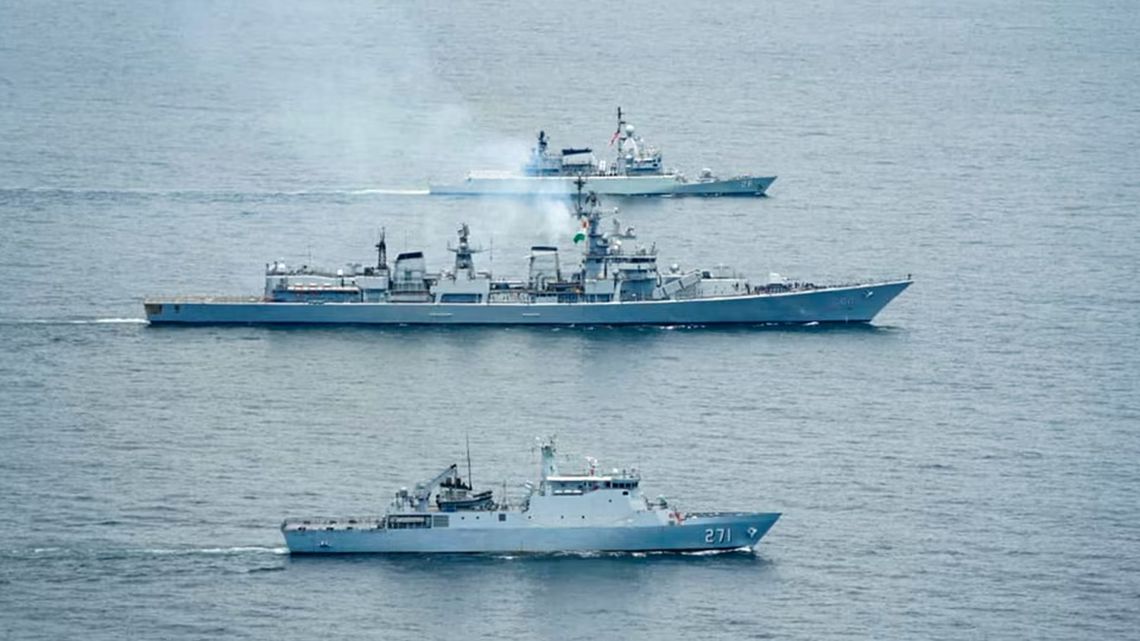
 Aditya Didwaniya

 Pratik Agrawal