 Akshay Didwaniya
Every great trading relationship has a geography. For decades, India and Russia sent cargo the long way round, through the Suez Canal, the Mediterranean and the Baltic. Another route runs east across the Bay of Bengal, through the Malacca Strait, and north to Russia’s Pacific coast. That route is the Chennai–Vladivostok Eastern Maritime Corridor (EMC). It may matter more to the next chapter of this partnership than any single pipeline, treaty or summit communiqué.

Every great trading relationship has a geography. For decades, India and Russia sent cargo the long way round, through the Suez Canal, the Mediterranean and the Baltic. Another route runs east across the Bay of Bengal, through the Malacca Strait, and north to Russia’s Pacific coast. That route is the Chennai–Vladivostok Eastern Maritime Corridor (EMC). It may matter more to the next chapter of this partnership than any single pipeline, treaty or summit communiqué.
A Friendship Built on Steel, Not Just Statements
To understand why the sea road matters, start with the Soviet years. The USSR was not just a diplomatic friend to newly independent India. It was an industrial partner when Western capital was cautious.
Soviet engineers helped build the Bhilai Steel Plant after the 1955 agreement. Bokaro, heavy machinery, power equipment and oil exploration followed. The 1971 Treaty of Peace, Friendship and Cooperation gave the relationship a strategic backbone.
Trade ran on a distinctive rupee-rouble arrangement. India paid for Soviet goods in rupees and supplied tea, textiles, leather, pharmaceuticals and engineering goods in return. It spared India scarce hard currency. It also built a generation of Indian firms that knew the Soviet market well.
The Soviet collapse in 1991 broke this system. Clearing arrangements ended and trade fell sharply. Russia’s own economy was in turmoil. Yet political trust survived. The 1993 Treaty of Friendship, the 2000 Strategic Partnership and the 2010 upgrade to a “Special and Privileged Strategic Partnership” kept the thread intact.
The Soviet legacy matters today for one reason. India and Russia already trust each other. What the relationship lacked for thirty years was a modern commercial architecture. The EMC is part of building it.
The Numbers: Record Trade, Lopsided Basket
Trade is now at historic highs. India’s Commerce Secretary told TASS that bilateral trade reached a record $68.69 billion in the 2025-26 fiscal year. Reuters noted that commerce rose more than five-fold from about $13 billion in 2021, driven almost entirely by Indian energy imports.
That is the problem. In 2024-25, India’s exports to Russia were $4.8 billion, while imports were $63.8 billion. A relationship that is this large and this one-sided is vulnerable. It depends on oil prices, sanctions and discounts.
| Fiscal year | Total trade (USD bn) | India’s exports to Russia (USD bn) | India’s imports from Russia (USD bn) |
|---|---|---|---|
| 2024-25 | 68.7 | 4.9 | 63.8 |
| 2025-26 | 59.9 | 4.5 to 4.9 (sources differ) | 55.4 |
Both governments have named the problem. Moscow says it wants to import more Indian goods to balance trade. New Delhi wants to sell automobiles, electronics, machinery, industrial components, textiles and foodstuffs. Pharmaceuticals, agriculture and textiles are the other obvious growth sectors.
The shared target is $100 billion in trade and $50 billion in mutual investment by 2030. Reaching it needs more than higher oil volumes. It needs logistics that make Indian goods competitive in Russian markets, especially in Siberia and the Far East.
The Route: Why Vladivostok, Why Chennai
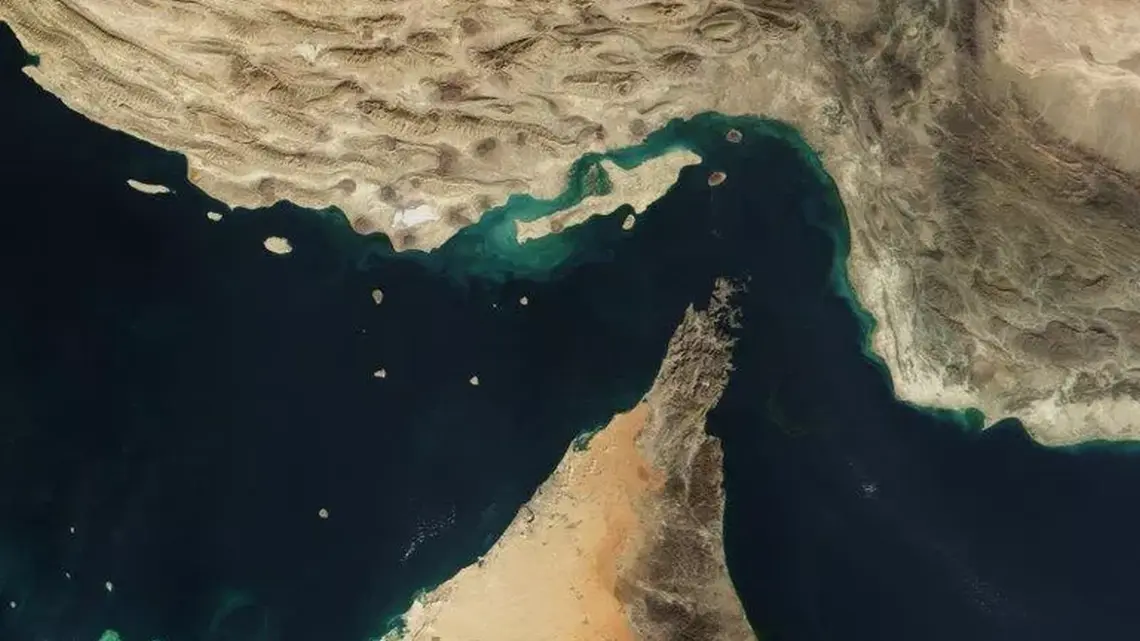
The EMC is a simple idea. Chennai is the largest port on India’s east coast. Vladivostok is Russia’s main Pacific gateway. Analysts put the route at 5,647 nautical miles (10,458 km). The ship passes the Strait of Malacca and crosses the South China Sea and the Sea of Japan.
The savings are the argument. A CRISIL feasibility study found the sea link is 45 per cent shorter than the Mumbai–St Petersburg route. Officials have estimated transit time falling from about 40 days to about 24 days. Figures vary by cargo and source. Some reports cite savings of up to 16 days. The direction is clear in every estimate.
| Mumbai to St Petersburg (via Suez) | Chennai to Vladivostok | |
|---|---|---|
| Distance (nautical miles) | about 8,675 | about 5,600 to 5,650 |
| Official transit time | 40+ days | about 24 days |
| Reported transit today | n/a | about 28 days, via transshipment |
The corridor also links Indian ports beyond Chennai. Paradip and Visakhapatnam are connected to it. That matters for coking coal, fertilisers and energy cargo, which the eastern ports handle.
It also gives India an option. When tensions in West Asia disrupt shipping, interest in the EMC revives. A trade route that avoids the Red Sea has real strategic value.
From Memorandum to Maritime Lane
The corridor has a paper trail. It began with a memorandum of intent signed in Vladivostok on September 4, 2019, between India’s shipping ministry and Russia’s transport ministry. Years of workshops, port visits and feasibility work followed.
Indian officials have since described the corridor as operational. Ports Minister Sarbananda Sonowal has said it is carrying oil, food and machines. In practice, this is mostly bulk cargo, especially crude oil and coal.
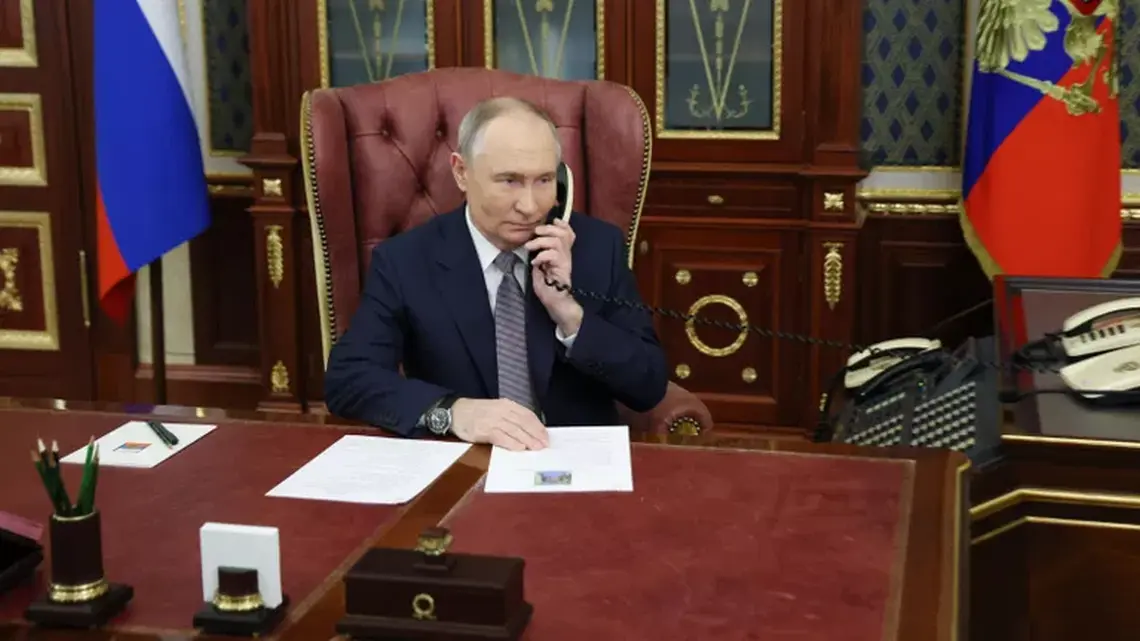
The December 2025 Putin visit raised the profile further. At the 23rd Annual Summit in New Delhi, the two sides adopted the Programme for the Development of Strategic Areas of India-Russia Economic Cooperation till 2030. They signed over 16 agreements. These included labour mobility, customs procedures, food safety standards and maritime cooperation.
On the sea, two agreements stand out. One was a memorandum on training specialists for ships operating in polar waters. The other was an agreement between India’s shipping ministry and the Maritime Board of the Russian Federation. The leaders committed to deepen work on three connectivity lines: the International North-South Transport Corridor, the Chennai–Vladivostok corridor and the Northern Sea Route.
Together these form a connected network. INSTC links India to Russia through Iran and the Caspian. The EMC opens the Pacific side. The Northern Sea Route could one day link the Arctic. Trained Indian seafarers and ice-class shipbuilding would give India a place in that future.
Money, Currency and Cooperation
Payments have long been a barrier. Sanctions, insurance and banking restrictions have complicated settlement. The two governments agreed to develop bilateral settlement systems in national currencies. Reports say 96% of commercial deals are already in national currencies.
A second tool is the proposed free trade agreement. India and the Eurasian Economic Union signed Terms of Reference in Moscow to launch FTA negotiations. Lower tariffs on Indian goods in a market of that size would make a regular shipping service much easier to justify.
Investment is moving too. Officials say Rosneft has pledged more than $25 billion towards Indian refining and fuel retail.
The Hard Truths
Honest editorials must name obstacles. The EMC faces several.
Container volume. Bulk cargo can fill a ship. Containers need steady demand. Trade sources suggest a minimum of 100 containers per week is needed to start a dedicated vessel service. That means Indian exporters must commit cargo, not just interest.
Container imbalance. India would send out far more than it brings back, or the reverse, depending on the season. Empty boxes cost money. Shipping lines will want return cargo.
Winter and ice. Reports cite Vladivostok’s harsh winters and container imbalances as live problems. Icebreaker support and winter scheduling will matter.
Chokepoints. The route passes through the Malacca Strait and the South China Sea. These are among the busiest and most strategically watched waters in the world. Security and insurance costs are real.
Sanctions and insurance. Indian and Russian authorities themselves have listed insurance and reinsurance among the problems to fix.
Distance from Russia’s population centres. Vladivostok is far from Moscow and the major industrial regions. Trans-Siberian rail capacity and onward logistics will decide how far Indian goods travel inland.
What Must Happen Next
Four steps would turn a promising route into a working trade lane.
First, a scheduled liner service with a fixed sailing calendar. Exporters plan around schedules, not intentions.
Second, aggregation. Indian pharmaceutical, food, textile and engineering exporters should pool cargo, ideally through port-led platforms at Chennai and Visakhapatnam.
Third, a financing and insurance package. Without predictable payments and cover, small and mid-sized exporters will stay away.
Fourth, people. The Russian Far East needs skilled workers. India has them. Labour mobility agreements are a trade tool as much as a social one.
The Sea Road Ahead
Soviet steel mills once showed what Indo-Russian cooperation could build. The EMC offers a modern version of that ambition. It is a trade route rather than an industrial plant, but it too needs patient work from both sides.
The route will not solve the trade imbalance alone. A ship cannot create demand. What it can do is lower the cost of reaching it. If Indian exporters use the corridor, and Russian ports and shippers deliver reliable service, the Pacific road could make $100 billion by 2030 a realistic goal.
For India, it also means something broader. A country that once relied on others’ sea lanes is learning to design its own. Chennai and Vladivostok sit on opposite ends of Asia. The distance between them is shrinking, and the trust behind that journey was built over seventy years.


 Aditya Didwaniya
 Pratik Agrawal

 Mayur Mohta