 Aditya Didwaniya
Nearly three years after landing where no spacecraft had ever gone before, India’s Chandrayaan-3 mission just claimed the 2026 Goddard Astronautics Award AIAA’s highest honour in space science. The award cements ISRO’s rise as a true global force in space exploration.

India’s Moon Mission Gets America’s Top Space Honour
India’s lunar trailblazer Chandrayaan-3 has done it again. The mission that made history by touching down near the Moon’s south pole in August 2023 has now bagged the 2026 Goddard Astronautics Award. The American Institute of Aeronautics and Astronautics widely known as AIAA handed over this prestigious honour in Washington DC on May 21. India’s Ambassador to the United States, Vinay Kwatra, stepped up to accept the award on behalf of ISRO at the AIAA ASCEND 2026 Conference.
This is no ordinary trophy. The Goddard Astronautics Award is AIAA’s highest recognition the gold standard for achievement in astronautics. The award was created to honour the legacy of Robert H. Goddard rocket visionary, bold experimentalist, and the man whose early liquid rocket engine launches paved the way for modern space science. Mrs. Goddard herself endowed the prize to keep her husband’s pioneering spirit alive. The award took its current form in 1975, when AIAA widened the criteria beyond propulsion science alone.
Why Chandrayaan-3 Deserved Every Bit of This
On August 23, 2023, Chandrayaan-3 etched its name into history books forever. The spacecraft comprising the Vikram lander and the Pragyan rover softly touched down near the Moon’s south pole at 6:04 pm IST. No country had ever pulled this off before. India joined the US, Russia, and China as only the fourth nation to achieve a soft lunar landing. But it went further it was the first to reach that frozen, shadowy southern region entirely.
The south pole matters enormously scientifically and strategically. It holds clues about water ice, ancient soil composition, and resources that could one day support human settlements on the Moon. Chandrayaan-3 delivered exactly that hard data on key chemical elements found in the lunar south polar soil. Scientists believe those findings could eventually support manufacturing right there on the lunar surface.
ISRO built Chandrayaan-3 on hard-won lessons from Chandrayaan-2. That mission ran into trouble in 2019 when its lander lost contact just moments before landing. But ISRO engineers went back to the drawing board and this time, they got everything right. The mission launched on July 14, 2023, from the Satish Dhawan Space Centre in Sriharikota, riding the powerful LVM3 rocket skyward.
Ambassador Kwatra Lays Out India’s Space Vision
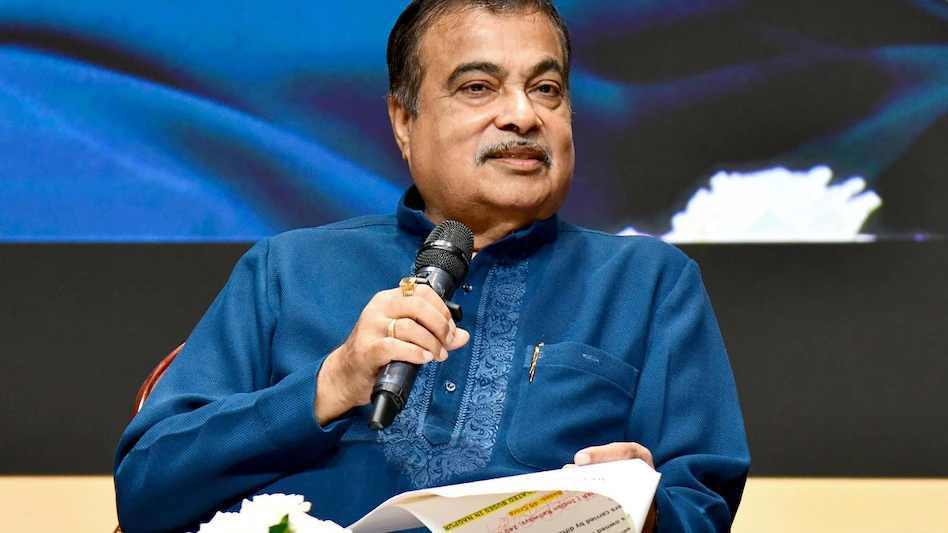
Accepting the Goddard Astronautics Award, Ambassador Vinay Kwatra did not just look back he looked far ahead. He outlined PM Narendra Modi’s Space Vision 2047 an ambitious roadmap covering deep space exploration, human spaceflight, and India’s rapidly growing commercial space industry. He pushed strongly for deeper ties between Indian and American governments, research bodies, and private industries signalling that the India-US space partnership is just getting started.
A Recognition That Echoes Across the World
Chandrayaan-3’s global recognition does not stop here. The mission had already bagged the 2024 John L. “Jack” Swigert Jr. Award for Space Exploration from the US-based Space Foundation. Before that, the IAF World Space Award 2024 went to the ISRO team at the International Astronautical Congress in Milan. Each honour builds on the last telling a story of a space agency that refuses to slow down.
The Goddard Astronautics Award goes to an individual or a team. In team nominations, contributors are listed with no more than two officially designated to accept the award. That India’s ambassador himself stood at the podium in Washington DC speaks volumes about how seriously the world is now watching ISRO.


 Akshay Didwaniya



 Mayur Mohta