 Akshay Didwaniya
While the US dollar holds its traditional safe-haven appeal, China’s yuan is outpacing nearly every major currency in 2026 riding on Hormuz toll payments, BRICS trade shifts, and growing doubts about petrodollar dominance.

The Iran War Has Opened a Door China Was Already Knocking On
The ongoing conflict involving the United States, Israel, and Iran has done something few predicted it has quietly handed China’s yuan a powerful moment on the global financial stage. As oil tankers navigate the narrow and increasingly tense Strait of Hormuz, a new reality is taking shape. Ships passing through are being charged transit fees not in US dollars, but in Chinese yuan. This single shift is rattling the very foundation of a system that has kept the dollar at the top of global finance for over five decades.
The yuan has surged nearly 2.4% against the dollar year-to-date in 2026. It is now the only major currency along with its offshore counterpart CNH that has actually gained ground against the greenback since the Iran war began. Most Asian currencies have fallen behind. Analysts at ING revised their yuan forecast band to 6.70–7.05, calling it their previously “bullish scenario.” What was once a stretch target has now become the new baseline.
Hormuz Becomes a Live Test Case for the Petroyuan
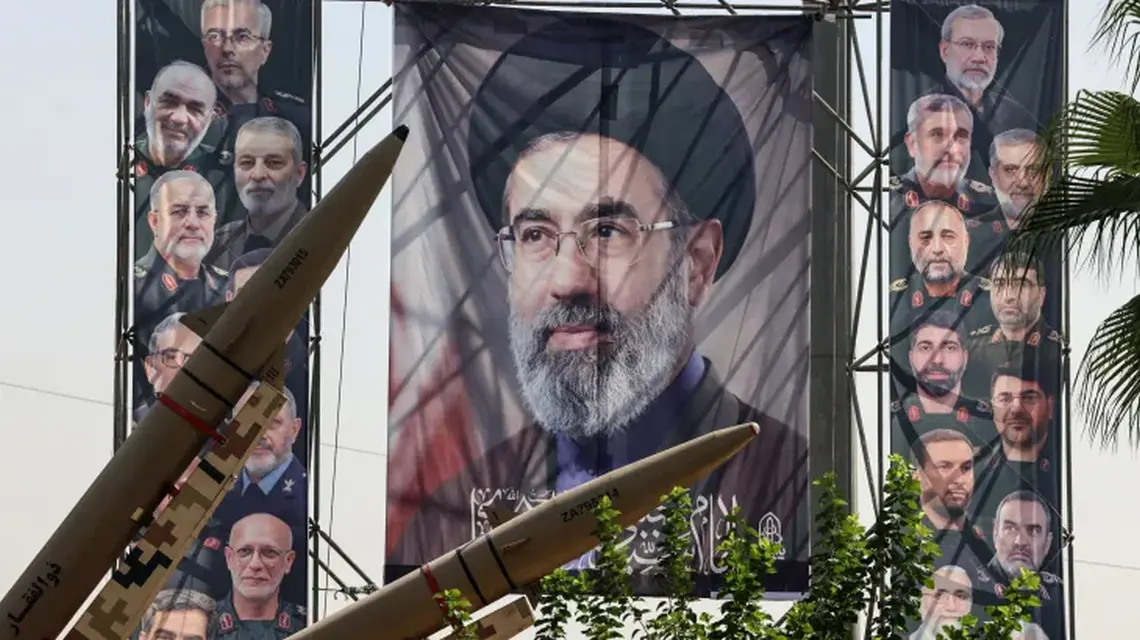
Iran’s decision to charge yuan-denominated tolls at the Strait of Hormuz is more than a wartime tactic it is a live financial experiment. The Strait controls roughly one-fifth of the world’s oil and liquefied natural gas supplies. By demanding yuan at this critical chokepoint, Iran and China are turning a geography lesson into a geopolitical weapon aimed squarely at dollar hegemony.
Deutsche Bank’s FX Managing Director Mallika Sachdeva put it plainly in a note published in late March 2026. She said the conflict is testing the security-for-oil pricing arrangement that has underpinned dollar-based oil trade since the 1970s. She warned this conflict could mark the beginning of “erosion in petrodollar dominance, and the beginnings of the petroyuan.” That is a striking claim from a major Western financial institution and markets are beginning to listen.
BRICS Nations Are Quietly Bypassing the Dollar
The Hormuz toll story does not exist in isolation. Across the BRICS bloc, a quiet but determined move away from dollar settlements is gathering pace. Indian refiners purchased around 60 million barrels of Russian crude in March 2026 alone and a meaningful chunk of those transactions bypassed the dollar entirely. Settlements moved through Chinese yuan and UAE dirhams instead, marking the first time a top-five oil importer has structurally sidestepped the dollar for crude oil purchases.
China’s Cross-Border Interbank Payment System known as CIPS processed the equivalent of $245 trillion in yuan-denominated transactions in 2025. That is real, working financial infrastructure. CIPS volumes spiked sharply in March 2026, right after the US launched strikes on Iran. Payments that would normally have flowed in dollars through SWIFT moved instead through CIPS in yuan. The Council on Foreign Relations noted this shift as direct evidence of sanction-avoidance driving a structural change in global payment routing.
The Dollar Still Leads But the Cracks Are Showing
To be clear, the dollar is not finished. It still sits at the centre of 88% of global foreign exchange transactions, according to the Bank for International Settlements. The Dollar Index actually surged to 2026 highs when the Iran war broke out a classic safe-haven reaction. High oil prices are forcing importers to buy dollars to pay for expensive crude, creating natural demand. Europe is under greater pressure than the US, with natural gas prices on the continent rising 39% compared to just 3.5% in America a gap that structurally supports the greenback.
But the longer view tells a more complicated story. Brazil’s central bank doubled its gold holdings in 2025 lifting gold to 7.19% of its total reserves from 3.55%. Dollar assets as a share of its reserves fell to a record low of 72%. Other central banks are following a similar path, quietly trimming their dollar exposure. The trend is slow and uneven but it is real.
What Comes Next for the Yuan and the Dollar
Experts are careful not to overstate how fast this is moving. ING analysts describe the shift as “a decade-long progression to a multipolar world” one where the dollar, euro, and yuan might each dominate their respective regional spheres. Russia confirmed in January 2026 that talks on a unified BRICS currency “have not taken place and are not taking place now.” China still runs strict capital controls that limit how freely the yuan moves across borders.
Yet the habits being built right now may outlast the war itself. The yuan-settlement infrastructure created during the Russia sanctions period after 2022 became a permanent feature of Sino-Russian trade. If the Hormuz toll regime fades after a ceasefire, the operational know-how the banking relationships, payment rails, and trust in CIPS will likely stay. That is the deeper game Beijing is playing and the Iran conflict has accelerated it by years.
“The Strait of Hormuz could indeed become a testing ground for petroyuan and crypto-based energy transactions,” said Dr. Alam Saleh of the Australian National University, in comments to Sputnik. “It sets a powerful precedent, encouraging BRICS to experiment with non-dollar trade.”
The dollar is not dying. But for the first time in a long time, the yuan has something the dollar does not momentum.

 Pratik Agrawal
 Mayur Mohta