
 The BRICS Times
Prime Minister Narendra Modi will visit Punjab on Tuesday, September 9, to take stock of the flood situation that has led to the loss of at least 48 lives.
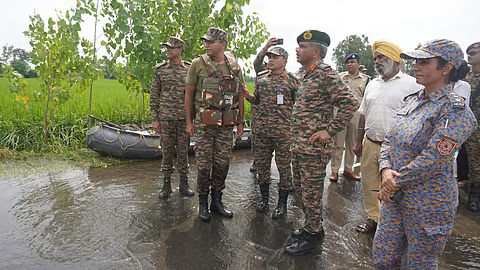
The devastating floods in Punjab have left several districts submerged, causing immense loss of life and property. Dozens of people have lost their lives while many more have been displaced as overflowing rivers and heavy rains continue to wreak havoc. Thousands of acres of farmlands have been destroyed, leaving crops damaged and farmers in deep distress.
Prime Minister Narendra Modi is scheduled to visit Punjab on Tuesday, September 9, where he will personally assess the scale of destruction caused by the floods. His visit comes at a time when large-scale rescue and relief operations are being carried out to support those impacted.
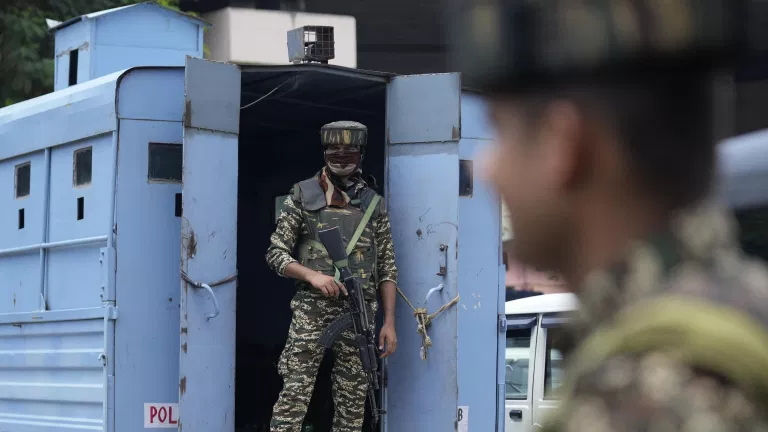
The Indian Army has deployed multiple columns across flood-affected districts to lead critical relief efforts, with the National Disaster Response Force (NDRF), Border Security Force (BSF), Punjab Police, and local administrations working in close coordination. Alongside official agencies, local residents, volunteers, aid groups, and even celebrities have stepped forward to assist in the ongoing operations.
Bharatiya Janata Party (BJP) state president Sunil Jakhar earlier stated that the Prime Minister will review the entire situation during his visit. Punjab Chief Minister Bhagwant Mann, who was briefly hospitalised due to exhaustion and low heart rate, has also been closely monitoring state relief measures and coordinating responses from government departments.
The current floods are being described as one of the worst disasters Punjab has seen in decades. Heavy rainfall in Himachal Pradesh and Jammu & Kashmir swelled the Sutlej, Beas, and Ravi rivers along with several seasonal rivulets, leading to the severe situation. Although water inflow in several dams has marginally reduced, officials caution that the situation remains critical across many affected districts.
The death toll in Punjab climbed to 48 on Sunday as two more lives were reported lost in the calamity. According to officials quoted by PTI, crops covering nearly 1.76 lakh hectares have been damaged, further aggravating the crisis for farmers and rural communities.
Educational institutions in Punjab are now set to reopen after being closed due to the floods. State Education Minister Harjot Bains announced that private schools could reopen from September 8, while government schools will resume classes on September 9. For institutions still directly impacted by flooding, decisions regarding their functioning will be made by the respective deputy commissioners.
Officials also confirmed that the water level in the Pong Dam reduced slightly to 1,392.20 feet on Sunday, but it still remained two feet higher than the dam’s upper limit. Built on the Beas river, the Pong Dam witnessed an inflow decline from over 47,000 cusecs on Saturday to nearly 37,000 cusecs on Sunday. At the same time, nearly 90,000 cusecs were released into the Shah Nehar barrage to manage excess water. Similarly, the Bhakra Dam on the Sutlej recorded 1,677.98 feet of water, with inflows standing at 66,891 cusecs and outflow reaching 70,000 cusecs.
The Punjab floods continue to disrupt lives, devastate agriculture, and put immense pressure on state resources, even as coordinated rescue and relief work by the Army, NDRF, and other agencies is preventing further large-scale loss. Prime Minister Narendra Modi’s visit is expected to provide a comprehensive review and offer crucial guidance on managing this crisis.

 Aditya Didwaniya
 Akshay Didwaniya
 Mayur Mohta


 Pratik Agrawal