
 Aditya Didwaniya
West Bengal’s new anti-infiltration campaign built on three stark words: detect, delete, and deport is pushing hundreds of alleged undocumented Bangladeshi migrants toward border checkpoints. With holding centres now operational and a tough new immigration law in place, the state appears to mean serious business.

A Border Scene Unlike Any Other
Something unusual has been unfolding along West Bengal’s border with Bangladesh. Hundreds of alleged undocumented Bangladeshi migrants men, women, and even children have been making their way to border checkpoints across the state. The reason is fear. The West Bengal government’s “detect, delete, and deport” campaign has set off a visible scramble and people aren’t waiting to be caught.
At the Hakimpur checkpoint in the Basirhat subdivision of North 24 Parganas, over a hundred people gathered near the border on a Tuesday morning. Authorities believe most of them had been quietly living across different parts of West Bengal for years. Recent government announcements changed that and now they are heading for the border.
What ‘Detect, Delete, Deport’ Actually Means
The phrase has become the central slogan of the new West Bengal administration’s immigration policy. It revolves around three key steps identifying undocumented foreign nationals living in the state, erasing their records from Indian databases, and finally sending them back across the border.
Chief Minister Suvendu Adhikari has backed the campaign publicly and forcefully. After meeting senior Border Security Force officials, he made the government’s position plain anyone not covered under the Citizenship (Amendment) Act will be treated as an illegal entrant and handed straight to border authorities.
“We are going to deal with this firmly,” he has stated, making clear that voluntary departures are preferable before enforcement steps up.
Malda’s Holding Centre: The First of Many
The state government has moved fast to build the infrastructure needed for this campaign. Holding centres temporary facilities to house suspected illegal immigrants before deportation are now coming up across districts.
Malda became the first district to get one operational. Located at Chandan Park in English Bazar town, the centre currently holds nine suspected Bangladeshi nationals, including women and minors. They were detained earlier and shifted here for document verification and biometric recording.
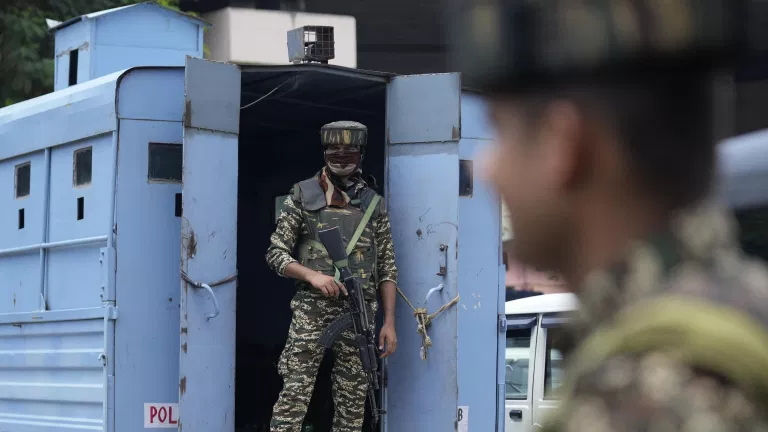
Officials say these centres work as transit points. Authorities verify papers, collect biometrics, and upload records to central databases before initiating the actual repatriation process. Security arrangements include CCTV cameras, police personnel, civil defence staff, and 24-hour monitoring. Suspected illegal entrants can reportedly be held for up to 30 days while verification and legal formalities run their course.
A New Law With More Teeth
The crackdown draws legal force from the recently enacted Immigration and Foreigners Act, 2025 a law that replaced older, more limited immigration statutes. The new law significantly expands the powers of surveillance, detention, and deportation available to Indian authorities.
Crucially, it allows police officers of head constable rank and above to make arrests of suspected violators without warrants. That is a major shift from earlier requirements. The West Bengal Home and Hill Affairs Department has also issued fresh directives aligned with central government guidelines specifically targeting illegal Bangladeshi migrants and Rohingya residents living in India without valid documents.
North 24 Parganas and Malda in the Spotlight
Two districts have emerged as the most visible flashpoints in this unfolding story. North 24 Parganas which shares a long, porous stretch of border with Bangladesh has seen the largest gatherings near checkpoints. Malda, another border district with deep cross-border ties, is where the first holding centre became operational.
Reports from both districts indicate that many of those attempting to return to Bangladesh include daily wage labourers, domestic workers, construction workers, and people employed in fisheries migrants who had blended into the local economy over years, sometimes decades.
The CAA Shield: Who Is Protected?
The state government has been careful to clarify one key point communities covered under the Citizenship (Amendment) Act will not face action under this drive. Hindu, Sikh, Jain, Buddhist, Parsi, and Christian minorities from Afghanistan, Bangladesh, and Pakistan who entered India before December 31, 2024, remain protected from deportation.
Those outside this protection primarily Muslim Bangladeshi migrants and Rohingya residents fall squarely within the campaign’s scope.
Political Temperatures Rise
The crackdown has sharpened an already-charged political debate in the state. BJP leaders have rallied behind the action, framing it as a long-overdue response to a genuine security threat. BJP MP Khagen Murmu argued that West Bengal had become dangerously exposed to infiltration and extremist activity over the years.
Opposition voices, however, have flagged concerns about how the drive is being carried out raising questions about documentation requirements, the treatment of long-term residents, and the rights of people who may have been living in India for decades.
What Comes Next
With border crowds growing and holding centres becoming functional across districts, West Bengal’s anti-infiltration drive is clearly moving from announcement to enforcement. The coming weeks will test both the government’s resolve and its capacity to carry this out in an orderly, lawful manner while the human cost of the policy continues to play out along the border in real time.

 Akshay Didwaniya
 Mayur Mohta


 Pratik Agrawal