 Pratik Agrawal
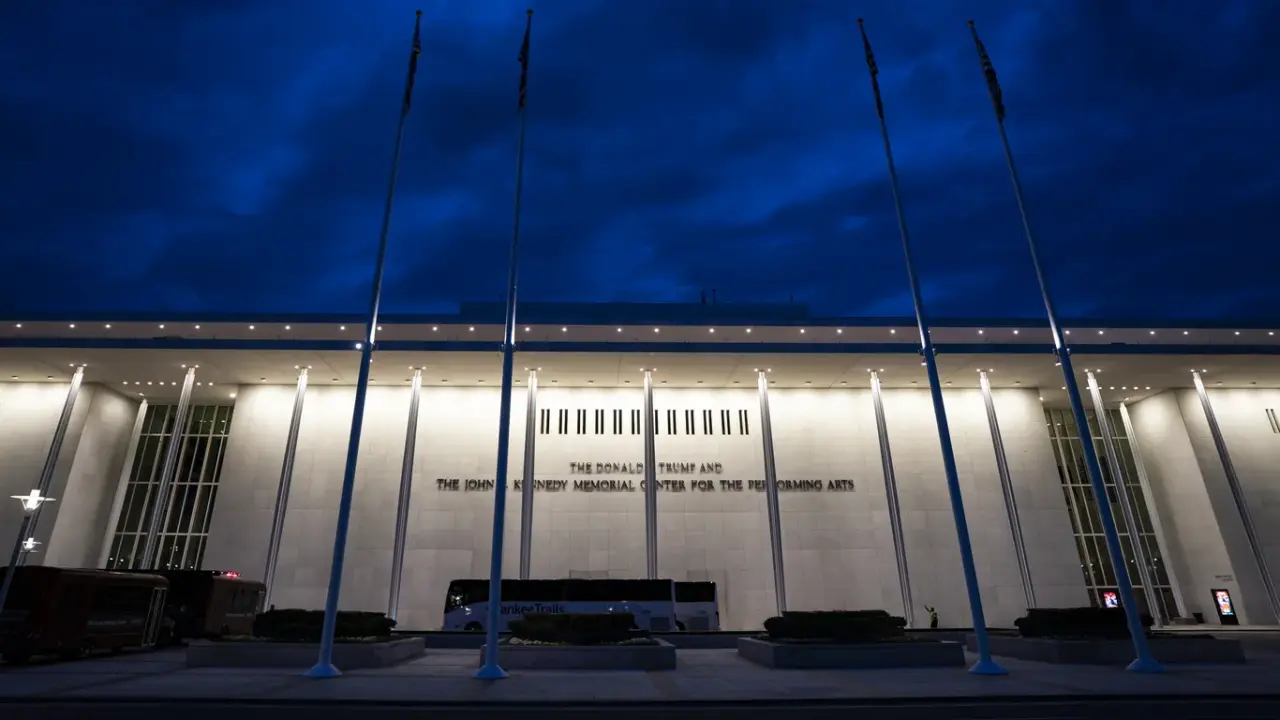
A federal judge ruled that the Kennedy Center’s board went beyond its legal authority when it renamed the iconic venue after President Trump. The court also blocked the planned shutdown of the building dealing a significant blow to the administration’s renovation ambitions.

A Federal Judge Steps In
A D.C. district judge signed a court order on Friday directing that President Trump’s name must come down from the Kennedy Center for the Performing Arts. Trump now has just two weeks to strip his name from the building and all surrounding signage.
The ruling lands as a sharp legal setback for the president’s long-touted plans to overhaul the beloved performing arts venue. Friday’s order also put the brakes on the planned closure of the building which had been set to shut its doors later this year.
What the Judge Actually Said
U.S. District Judge Christopher R. Cooper wrote a sweeping 94-page ruling making his position crystal clear from the very start.
“The Court has concluded that the Board overstepped its statutory bounds by unilaterally renaming the Kennedy Center after President Trump,” Cooper wrote.
He went further, tracing the venue’s naming history all the way back to 1964. “In 1964, Congress deliberately rechristened the ‘National Cultural Center’ the ‘John F. Kennedy Center for the Performing Arts,'” he explained.
Cooper added that the building’s name has never been ambiguous. “The text, structure, and evolution of the organic statute makes the institution’s name abundantly clear. Congress likewise took pains to ensure that no other memorial-like dedication would grace the Center’s public spaces.”
His conclusion was direct and firm. “As stated at the outset, Congress gave the Kennedy Center its name, and only Congress can change it.”
Trump Fires Back Hard
Trump did not stay silent. He fired off a nearly 600-word post on Truth Social late Friday blasting the judge and lamenting what he called unfair treatment from the courts.
He also announced the Commerce Department would work out arrangements to hand control of the Kennedy Center over to Congress.
“Unless I am free to do what I do better than anyone else, bring this Institution back, physically, financially, and artistically, I have no interest in continuing what could only be a hopeless journey into ‘NEVER NEVER LAND,'” he wrote.
How Did We Get Here?
The roots of this legal fight stretch back to early 2025. Trump dismissed several long-standing Kennedy Center board members in February of that year replacing them with allies of his own choosing.
His newly assembled board included Trump administration officials and close associates among them former Attorney General Pam Bondi and Sergio Gor, the U.S. Ambassador to India. That board promptly elected Trump as chair, approved the name change, and green-lit a major renovation plan.
Before the shake-up, the board had been a diverse group of roughly three dozen members appointed to six-year terms and split relatively evenly between Biden and Trump appointees.
The Lawsuit That Sparked It All
Friday’s ruling grew out of a lawsuit filed by Rep. Joyce Beatty, a Democrat from Ohio. She claimed her voting rights as a board member were quietly stripped in 2025, after the Kennedy Center’s bylaws were quietly rewritten.
Beatty submitted a declaration to the court stating that all board members had previously held voting rights, before “ex officio” positions were reclassified as “non-voting.”
In an emailed statement, Beatty said the ruling confirms the name change had “no basis in law.”
“The Kennedy Center is an institution that belongs to the American people, not to Donald Trump. He has desecrated this sacred memorial for his own vanity. I am proud to have fought for the rule of law and to protect this sacred institution,” she said.
The Kennedy Center Pushes Back
Roma Daravi, a spokesperson for the Kennedy Center, told reporters the institution is “confident that on appeal the court will uphold the Board’s will to recognize President Trump’s historic contributions to our nation’s cultural center.”
She added: “We will review the decision carefully, though the reality remains the Center requires an urgent and significant restoration.”
What About the Renovations?
Trump had previously announced plans for major repairs and remodeling at the Kennedy Center. He argued that while the venue could technically stay open during construction, doing so would compromise the quality of the work.
Planned improvements included fixing water drainage issues near electrical rooms and the parking garage along with upgraded theater seating and production enhancements.
But Judge Cooper pushed back on the idea that a full closure was ever actually necessary. He noted in his ruling that while the board and outside reports “recommended an assortment of renovation projects, none called for the complete closure of the Center in order to accomplish the repairs.”
Instead, Cooper concluded, renovations could proceed in phases allowing the Kennedy Center to stay open throughout the entire process.


 Aditya Didwaniya


 Mayur Mohta
 The BRICS Times