

 The BRICS Times
President Donald Trump brushed aside any notion of pulling out of the Iran conflict ahead of schedule declaring he won’t leave until the job is finished right. His remarks came just a day after he controversially told Congress that all hostilities with Iran had already “terminated.”

Trump Puts His Foot Down on Iran No Early Exit, No Shortcuts
Donald Trump made one thing crystal clear on Friday America is staying the course in Iran. Speaking before an enthusiastic crowd at The Villages, a popular retirement community in Florida, Trump delivered a confident message that left little room for interpretation.
“We’re going to get this thing done properly,” Trump said. “We’re not going to leave early and then have the problem arise in three more years.”
The remarks landed just one day after Trump sent letters to congressional leaders claiming the Iran war had effectively ended a bold assertion that immediately drew sharp pushback from Democrats and legal experts alike.
The “Terminated” Claim That Stirred a Political Storm
The conflict with Iran which erupted on February 28, 2026, when the U.S. and Israel launched coordinated strikes on Tehran had crossed its 60-day mark on Friday. Under the 1973 War Powers Resolution, that milestone triggers a legal requirement for Congress to either declare war or authorize continued military force.
Trump, however, had other ideas. He sent formal letters to House Speaker Mike Johnson and Senate President Pro Tempore Chuck Grassley, arguing that the war no longer technically applied to the law’s deadline.
“On April 7, 2026, I ordered a two-week ceasefire. The ceasefire has since been extended. There has been no exchange of fire between United States Forces and Iran since April 7, 2026. The hostilities that began on February 28, 2026, have terminated,” Trump wrote in the letters.
Yet in the very same letters, Trump acknowledged that the situation remained far from resolved. “Despite the success of United States operations against the Iranian regime and continued efforts to secure a lasting peace, the threat posed by Iran to the United States and our Armed Forces remains significant,” he added a line that many critics say undermines his own “terminated” argument.
Democrats Push Back Hard Call It “Unauthorized War”
Congressional Democrats wasted no time tearing into Trump’s interpretation. Senior Democratic lawmakers including ranking members of the House Foreign Affairs, Armed Services, and Intelligence committees issued a joint statement rejecting the ceasefire-stops-the-clock theory.
“Hostilities have not ceased; both sides are enforcing naval blockades through military force,” the lawmakers wrote. “From Day One, this has been an unauthorized war of choice based on a demonstrably false premise of an imminent Iranian threat and as of today, 60 days in, there is still no congressional authorization for President Trump’s war.”
Senator Tim Kaine, a vocal critic of the war, also challenged Defense Secretary Pete Hegseth directly during Senate testimony on Thursday. Hegseth had argued before the Senate Armed Services Committee that a ceasefire effectively “pauses or stops” the 60-day countdown. Kaine didn’t buy it telling Hegseth plainly: “I do not believe the statute would support that.”
Rep. Sara Jacobs of California a House Armed Services Committee member was even more blunt. The administration’s argument, she said, “has no basis in law.”
War Powers Act A Clock That Won’t Stop Ticking?
Legal scholars largely sided with the Democrats. Michael Glennon, a professor of constitutional and international law at The Fletcher School at Tufts University, told reporters that Trump’s position “is a stretch” and that the 60-day clock had not stopped.
Stephen Pomper former senior National Security Council official called the administration’s ceasefire logic outright implausible. “I don’t think it’s a very credible interpretation. It’s certainly not based on the text of the statute,” he said. “There’s still an enormous American deployment. There’s an active blockade, which is an act of war.”
The U.S. military continues to operate two carrier strike groups, more than 100 fighter and surveillance aircraft, and over a dozen warships all actively enforcing a naval blockade around Iranian ports. U.S. Central Command confirmed that 45 commercial vessels had been “directed to turn around or return to port” to comply with the blockade.
Trump Refuses to Seek Congressional Authorization
When reporters pressed Trump on whether he would go to Congress to seek formal war authorization, he flatly refused dismissing the idea entirely.
“It’s never been sought before,” Trump told reporters at the White House before departing for Florida. “There’s been numerous, many, many times, and nobody’s ever gotten it before. They consider it totally unconstitutional, but we’re always in touch with Congress, but nobody’s ever sought it before. Nobody’s ever asked for it before. It’s never been used before. Why should we be different?”
Legal experts noted that Trump’s claim is factually incorrect multiple presidents have sought and received congressional war authorization in the past.
Gas Prices Spike And Republicans Grow Uneasy
The ongoing standoff is already hitting Americans in their wallets. National gas prices jumped more than nine cents in a single day reaching $4.39 per gallon as the Strait of Hormuz blockade continues to choke global oil supply. Trump insisted prices could come “tumbling down” once the war wraps up.
The economic fallout is quietly rattling Republican lawmakers, who largely remain supportive of Trump’s wartime decisions but with growing unease. Senator Kevin Cramer of North Dakota said he would vote for a war authorization if Trump asked for one, but questioned whether the War Powers Resolution itself was even constitutional.
“We cannot let lunatics have a nuclear weapon,” Trump declared at The Villages defending the war’s rationale while insisting his administration would hold its ground until Iran agreed to a deal on nuclear disarmament.
For now, Congress has adjourned for a week-long recess leaving the legal and political battle over war powers unresolved, and the Iran standoff very much alive.


 Akshay Didwaniya
 Mayur Mohta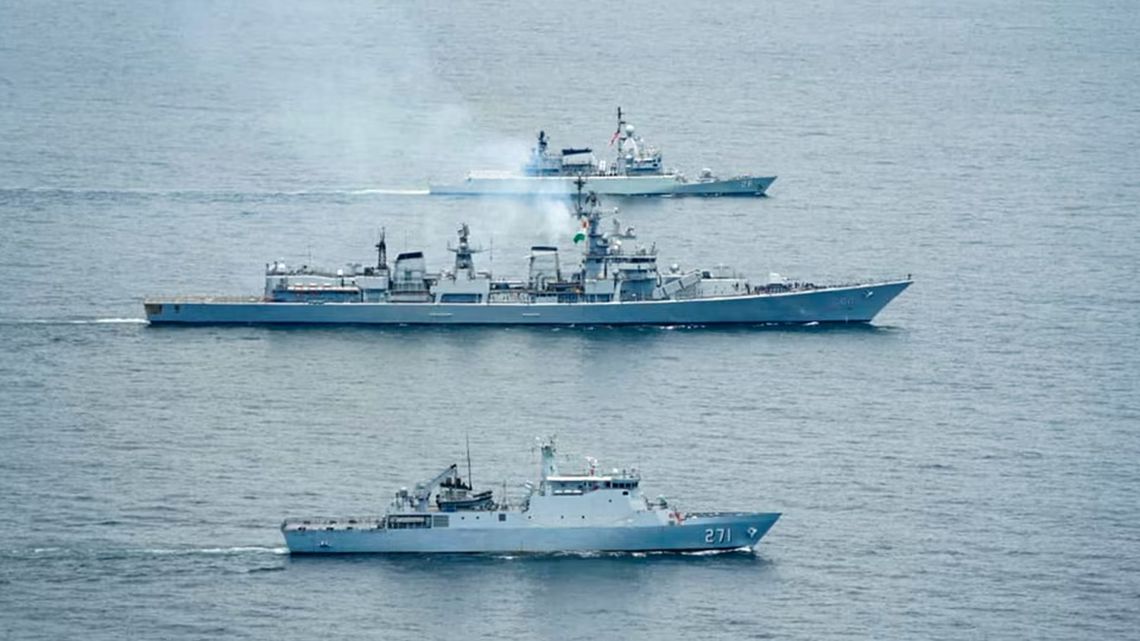
 Aditya Didwaniya

 Pratik Agrawal