 Akshay Didwaniya
As the Supreme Court weighs the fate of the Places of Worship Act, similar disputes over religious sites have quietly spread across multiple states from Uttar Pradesh’s flashpoints to distant corners of Karnataka raising urgent questions about communal harmony and judicial overload.

A Legal Wave With No Sign of Receding
India’s courtrooms are witnessing a remarkable surge in temple-mosque disputes. From Uttar Pradesh’s already-heated Gyanvapi and Sambhal battles to Karnataka similar litigation has taken root in courts far beyond the Gangetic plains. Judges across the country are now grappling with petitions that seek to “ascertain the religious character” of mosques and shrines built centuries ago.
The pattern is strikingly consistent across cases. Hindu groups file a petition claiming a mosque was built over a demolished temple. A district court accepts the plea. Orders for surveys follow. Then chaos.
Also Read | Faithful Throng Bhojshala in Dhar for Unrestricted Prayers, A Day After Historic MP High Court Ruling
Sambhal Was a Warning Nobody Heeded
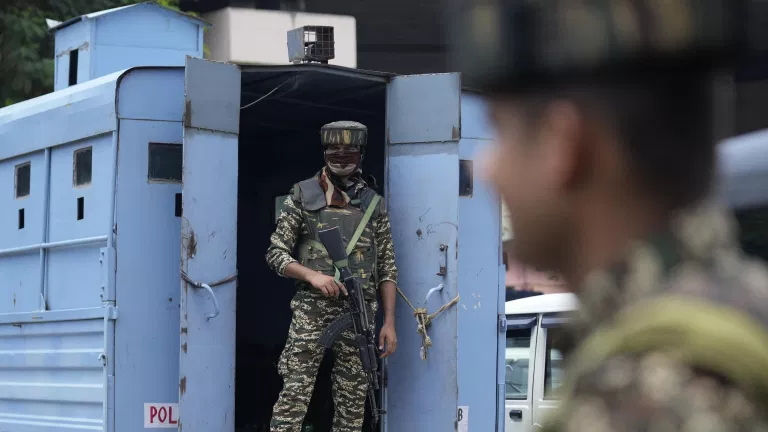
The violence in Sambhal, Uttar Pradesh, last November served as a grim marker. Four people lost their lives after a court-ordered survey of the Shahi Jama Masjid a Mughal-era mosque triggered clashes. Hindu groups had claimed the site once housed the ancient Harihar Mandir. The court moved fast, and so did the tensions.
“After the construction of the Ram Mandir, some people think they can become leaders of Hindus by raking up similar issues in new places. This is not acceptable,” RSS chief Mohan Bhagwat had remarked a rare note of caution from the Hindu right.
Yet petitions kept piling up.
Also Read | Bhojshala Is a Hindu Temple And Now, Hindus Say They Will Worship There Freely
Eleven Mosques, Eighteen Lawsuits And Counting
According to an affidavit placed before the Supreme Court, at least 11 mosques across India currently face 18 active lawsuits filed by Hindu groups claiming them as temple sites. Of these seven mosques are in Uttar Pradesh alone. One each is contested in Madhya Pradesh, Rajasthan, Karnataka, and Delhi.
The disputes stretch far beyond Gyanvapi and Mathura. The list now includes the Ajmer Dargah in Rajasthan, the Adhai Din Ka Jhonpra mosque built in 1199 in Ajmer, Teelewali Masjid in Lucknow, Atala Masjid in Jaunpur, and Baba Budan Giri Dargah in Karnataka. Closer to south India the Narendra Modi Vichar Manch sought permission to offer prayers inside a mosque in Srirangapatna, Karnataka, asserting it was constructed atop a Hanuman temple during Tipu Sultan’s reign.
Also Read | Bhojshala Declared a Hindu Temple, MP High Court Ends Decades of Dispute in Dhar
The Law That Was Supposed to Stop All This
The Places of Worship (Special Provisions) Act, 1991 enacted under Prime Minister P.V. Narasimha Rao was designed with one purpose: freeze the religious character of all places of worship as they stood on August 15, 1947. The Babri Masjid dispute was explicitly carved out as an exception. Everything else was meant to stay untouched.
For nearly three decades, the law largely held. Then came the 2019 Ayodhya verdict and the floodgates cracked open.
Former Chief Justice D.Y. Chandrachud’s decision to allow a survey of the Gyanvapi Mosque in Varanasi on the reasoning that the 1991 Act does not prohibit ascertaining the nature of a structure lit a fuse that has not been extinguished since.
The Supreme Court Steps In But Perhaps Too Late
By December 2024, the Supreme Court directed all trial courts across India not to register fresh petitions on temple claims nor pass any effective orders or survey directions in pending cases. Chief Justice Sanjiv Khanna was blunt: “Enough is enough. There has to be an end to this.”
The bench was battling an unwieldy pile of petitions and interventions. The matter regarding the constitutionality of the Places of Worship Act itself was pushed to a three-judge bench and scheduled for April 2025. The central government had not even filed its affidavit despite eight hearings.
The Supreme Court’s ruling on the Act is now awaited as perhaps the most consequential legal decision for India’s communal fabric in a generation.
Courts Are Not Just Overwhelmed, They’re Divided
Legal observers point out that lower courts particularly in UP and Rajasthan have been far too willing to entertain these petitions, often without fully examining whether the Places of Worship Act bars the suit at the threshold. The Allahabad High Court, meanwhile, ruled that a 1991 suit in Varanasi was maintainable and directed a comprehensive survey of the Gyanvapi mosque site.
Critics argue that courts are, in effect, rewriting history and doing so in real time, with flashpoints capable of exploding at any moment.
A Political Fault Line Dressed as a Legal Battle
For many observers, the legal route is just the newest iteration of an older political playbook. The Babri Masjid movement built the BJP’s base in northern India through the 1990s. Today with the Ram Temple consecrated at Ayodhya similar issues are being raised in Karnataka, Telangana, and even Rajasthan, states where the BJP has electoral interests.
“I have no issues with them, but we cannot deny the Mughals made an empire by destroying Hindu structures. I just want accountability,” said one petitioner who has filed RTI requests and district court petitions in Uttar Pradesh a view many lawyers and historians sharply contest.
The Gyanvapi Mosque committee moved the Supreme Court in December 2024 warning that the growing number of claims could lead to “drastic” consequences for communal peace.
The warning hangs over India’s courts and its streets.

 Aditya Didwaniya



 Mayur Mohta