 The BRICS Times
The Vikram 3201 chip proved its dependability after being tested in space on the PSLV-C60 mission, paving the way for future space applications.
First ‘Made in Bharat’ Chips! 🇮🇳 pic.twitter.com/QYFGA4HFLG
— Ashwini Vaishnaw (@AshwiniVaishnaw) September 2, 2025
At Semicon India 2025, Prime Minister Narendra Modi received the country’s first homegrown 32-bit processor chip, Vikram-32, from Electronics and IT Minister Ashwini Vaishnaw—marking a landmark achievement in India’s semiconductor self-reliance drive.
Developed by the Indian Space Research Organisation’s Semiconductor Laboratory (SCL), the Vikram processor is India’s first fully indigenous microchip engineered to withstand the harsh conditions of space missions. Its maiden batch, the Vikram 3201, was successfully validated during the PSLV-C60 launch, underscoring its reliability for future satellite and launch vehicle programs.
First unveiled in March, the Vikram chip showcases the country’s rapid strides in semiconductor technology since the India Semiconductor Mission (2021). In just three and a half years, India has shifted from being a large-scale consumer to a creator of advanced chips, powered by strong R&D, stable policies, and economic growth. Fabrication and packaging were carried out at SCL’s 180nm CMOS facility in Mohali, Punjab.
Technical Capabilities and Applications
The Vikram-32 processor can handle diverse computational tasks, including floating-point operations, using its 32-bit architecture. Designed to operate in extreme environments like space, it supports substantial memory and executes complex instructions required for satellite launches.
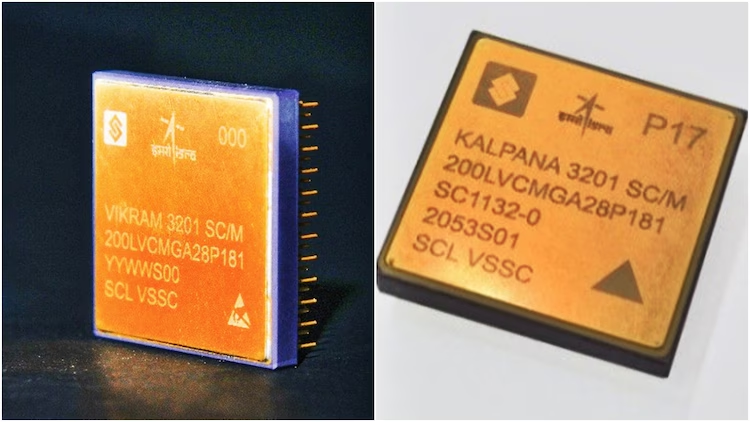
ISRO noted that the chip’s reliability and adaptability make it suitable not just for space exploration, but also for defence, aerospace, automotive, and energy sectors, positioning it as a strategic national asset.
During the handover, Minister Vaishnaw also emphasized India’s expanding semiconductor landscape: five fabrication units are under construction, 10 major projects worth ₹1.6 lakh crore have been approved across six states, and over 23 design startups are supported under the Design Linked Incentive scheme. The presentation of Vikram-32 symbolized India’s growing role in the global semiconductor ecosystem as a hub of innovation and stability.
The three-day Semicon India 2025 conference is focused on building a robust, resilient, and sustainable semiconductor ecosystem, with Vikram-32 standing as a testament to India’s technological progress and future ambitions.


 Aditya Didwaniya
 Akshay Didwaniya



 Mayur Mohta