

 The BRICS Times
From movie theatres to polling booths actor-turned-politician Vijay’s massive network of dedicated supporters quietly built one of the most organised grassroots political machines Tamil Nadu has ever seen, stunning the Dravidian establishment.

From Fandom to Footwork: The Groundwork Nobody Saw Coming
Long before a single vote was cast in the 2026 Tamil Nadu Assembly elections, something extraordinary was already quietly taking shape not inside some air-conditioned war room, but at street corners, tea stalls, and cramped local offices across the state. Vijay’s fans millions of them were already doing the hard work.
What began in 2009 as a simple fan welfare association called Vijay Makkal Iyakkam, reportedly numbering around 85,000 clubs across Tamil Nadu, was no longer just a space where admirers gathered to celebrate their favourite star. It had steadily, methodically, transformed itself into a finely tuned political ground force. The devotion was still there tattooed on chests, stitched onto shirts but the direction had changed entirely. This was now about doors being knocked, voters being registered, and booths being covered.
When Vijay launched Tamilaga Vettri Kazhagam (TVK) on February 2, 2024, he was not starting from scratch. He was simply putting a formal political roof over an organisational structure that his fans had spent fifteen years building from the bottom up.
70,000 Booth Agents The Number That Changed Everything
One move above all others signalled that TVK was serious. In February 2025, the party announced an ambitious drive to recruit over 70,000 booth committee secretaries one dedicated worker for every single polling booth across Tamil Nadu. The process ran entirely online, ensuring speed and reach that older parties struggled to match.
Vijay made his intentions crystal clear during the drive’s launch. “We are battle-ready to contest the 2026 Tamil Nadu Assembly elections,” he declared, leaving no one in doubt about where this was headed.
This was not mere political theatre. At a small TVK district office in Thiruvanmiyur, south Chennai months before election season officially began a party functionary named K.V. Damodaran, known to everyone as Damu, stood before a room packed with party workers and delivered instructions that had nothing of the fandom about them.
“Let’s begin early, elections will come when it has to come. We shall begin our work before others. Tell your people to knock on all doors rich or poor. You also do so personally,” he told them, his voice steady. “Dairiyama sollunga. Speak without fear… don’t beg for votes, we don’t bow in front of anyone.”
A Three-Cornered Fight That Nobody Expected
Tamil Nadu has been a two-party state for nearly five decades. The DMK and the AIADMK the twin pillars of Dravidian politics have traded power back and forth since 1977, building vast organisational machinery and deep caste networks over generations. Breaking that duopoly was considered close to impossible for any newcomer.
Vijay did not just disrupt the contest he shattered it.
Political analysts had long been sceptical. Ramu Manivannan, former professor of political science at the University of Madras, had warned ahead of polls that Tamil Nadu voters demand clear ideolog not star power. “Film stars always attract crowds,” he had said. “To assume all of them will translate into votes is unfair.”
It turned out the crowds were already votes they had just been waiting for a reason to show up differently.
Polling Day And a Revolution on ECR
When counting began on May 4, 2026, Chennai woke to something it had not quite prepared for emotionally. TVK crossed the majority mark in the 234-seat Tamil Nadu Assembly winning over 100 seats in its very first election. Vijay himself secured victories in both constituencies he contested Perambur in north Chennai and Tiruchirapalli East in central Tamil Nadu both previously held by the ruling DMK.
The scenes along East Coast Road that morning were unlike anything the city had seen in years. Motorbikes often carrying more than one passenger, all dressed in white, waving TVK’s red-and-yellow flags tore down the coastal stretch honking in wild celebration. The roads split instinctively between two destinations Vijay’s Neelankarai residence and the party headquarters in Panaiyur.
At Panaiyur, a fan named Balamurugan who had flown in from Kuala Lumpur wearing a shirt printed with Vijay’s face stood before television cameras, visibly overcome. “We are witnessing a revolution,” he said, his voice breaking. “This is democracy at its finest.”
An MGR Moment Decades in the Making
The parallels being drawn now are impossible to ignore. M.G. Ramachandran MGR swept the 1977 Assembly polls by converting his cinematic mass appeal into an institutional political machine, defeating an incumbent DMK that had underestimated the power of genuine public affection. Half a century later, Vijay has done the same thing and done it faster, with a party barely two years old.
Vijay became the first figure since MGR to translate statewide screen popularity into a direct mandate for power. The scale of that conversion was underlined by how the campaign survived its darkest moment a deadly stampede at a rally in Karur in September 2025 that claimed over 41 lives. Rather than derailing the movement, the constituency returned a TVK victory a result that spoke, more than anything, to the depth and durability of what Vijay’s supporters had built.
The fan army had become a winning machine. And Tamil Nadu, perhaps, would never look the same again.

 Akshay Didwaniya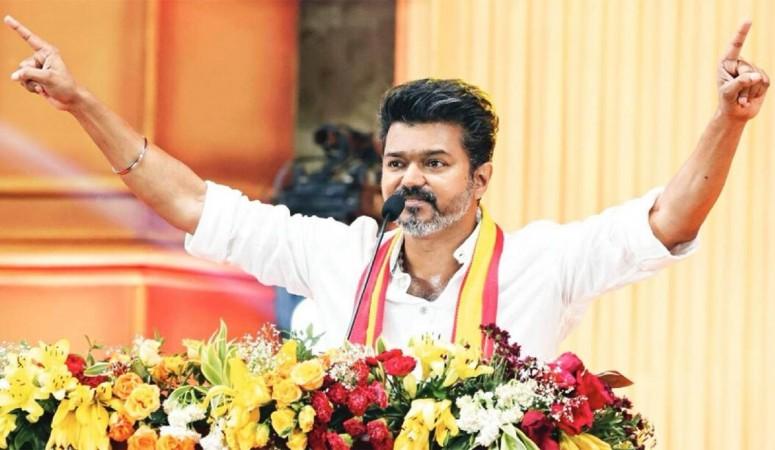

 Mayur Mohta
 Aditya Didwaniya

 Pratik Agrawal