 The BRICS Times
The demand is not limited to statehood; it’s a broader push to protect Ladakh’s identity, culture, and rights in its cold desert landscape
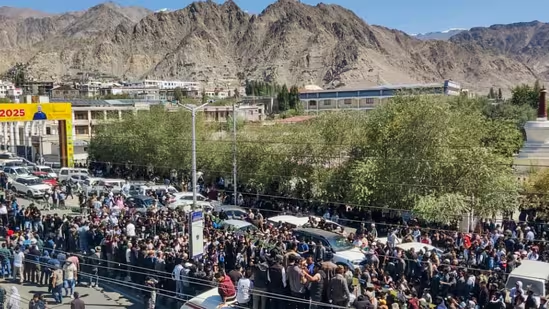
Protests driven mostly by young residents erupted violently in Leh, the administrative center of Ladakh, on Wednesday. The clashes broke out just two days after leaders of the Leh Apex Body (LAB), which has spearheaded the agitation, warned that public patience was running out.
The unrest is not only about securing statehood. Protesters are pushing for larger safeguards to preserve the unique social and cultural character of Ladakh, a region largely inhabited by tribal communities. Both Buddhist and Muslim groups, representing the region’s main communities, have come together to back this struggle.
On Monday, LAB leaders had declared they would not call off their hunger strike until their demands were addressed. The strike, which began on September 10, has already lasted over a month.
Renowned activist Sonam Wangchuk, who also protested under LAB’s campaign, criticized the violent turn of events and called it senseless. He ended his own fast in anger.
For four years now, LAB along with the Kargil Democratic Alliance (KDA), has been negotiating with the Union Ministry of Home Affairs (MHA) over its long-standing demands. The protests underline Ladakh’s growing frustration despite its importance for India’s security, especially as it shares a tense border with China.
Why did protests flare up in Leh?
The LAB’s youth wing called for a major protest this week, demanding an urgent meeting with the central government. They highlighted that the hunger strike, running since September 10, could not continue without progress.
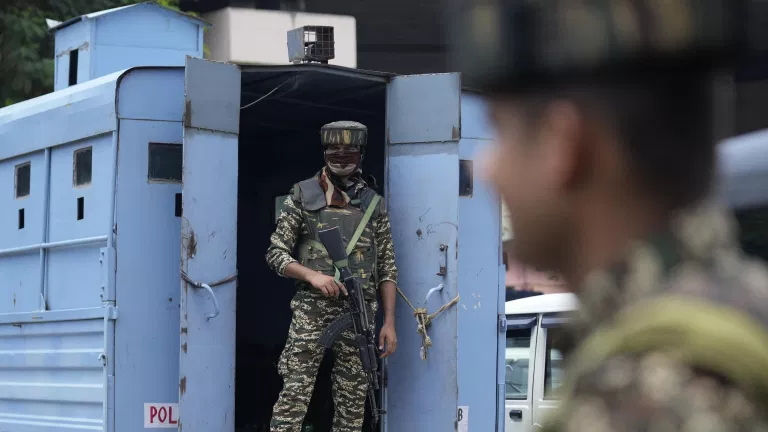
The MHA later announced that fresh talks with LAB would take place on October 6. The last round of discussions was held in May 2024. However, many in LAB viewed this unilateral date announcement as “dictation” while “people are sitting on hunger strike.” The move triggered anger, leading to violent demonstrations in Leh on Wednesday.
During an earlier online briefing, LAB co-chairman Chering Dorjey warned the government that frustration was mounting. “Our protest is peaceful, but people are getting impatient. The situation may get out of our hands,” Dorjey said, according to PTI.
Growing frustration with peaceful protest
Sonam Wangchuk has repeatedly said that the BJP-led government had promised Ladakh inclusion under the Sixth Schedule of the Constitution. He urged that this assurance be delivered before the Hill Council elections.
“If they fulfil their promise, Ladakh will vote for them. They will benefit the most, and vice versa,” Wangchuk stated.
He also acknowledged the rising impatience among locals. “They (people) tell us we are getting nothing through peaceful protest. We do not want anything to happen that may be embarrassing for India,” Wangchuk remarked.
The four major demands behind Leh-Ladakh agitation
The demand for change has existed since Ladakh was carved out as a separate union territory after the abrogation of Article 370 in 2019. But the campaign grew significantly stronger in 2024.
While Jammu and Kashmir was granted an assembly and elected government, Ladakh has remained under direct central rule. Many residents feel they lost critical safeguards, especially with the dilution of land rights after Article 370 was scrapped.
Since then, four key demands have emerged:
- Full statehood for Ladakh to ensure local self-governance
- Inclusion under the Sixth Schedule of the Constitution to safeguard tribal rights
- Creation of a separate public service commission to tackle unemployment
- Allocation of two parliamentary seats for Ladakh, instead of the current single seat
What makes the Sixth Schedule so significant?
The MHA has so far agreed to consider only two demands — a local service commission and two Lok Sabha seats. Officials argue Ladakh already got UT status, which was one of its earlier demands.
However, activists say the Sixth Schedule is crucial. It allows greater autonomy for tribal areas, similar to arrangements in states like Assam, Meghalaya, Mizoram, and Tripura.
Under this framework, Autonomous District Councils can legislate on local land, customs, and resources, and even collect taxes. Their authority often overrides state laws, subject to the governor’s approval.
Currently, the Ladakh Autonomous Hill Development Councils manage only district-level planning and development, with no wider powers.
Unemployment crisis fuelling anger
The demand for a separate service commission has become stronger due to Ladakh’s alarming unemployment levels. A recent survey revealed that 26.5% of Ladakh’s graduates are unemployed, nearly double the national average of 13.4%.
Among all states and UTs, only Andaman & Nicobar Islands reported worse figures, at 33%.
When talks began in December 2024, the government proposed a 95% job reservation for Ladakhis. But locals believe promises have not translated into action.
Political reactions and government’s view
Following Wednesday’s clashes, KDA leader Sajad Kargili expressed concern over the growing unrest. He wrote on X: “Whatever is happening in Leh is unfortunate. Ladakh, once peaceful, is now gripped by frustration & insecurity due to Govt’s failed UT experiment. The onus lies on the Govt—resume dialogue, act sensibly & fulfil Ladakh’s demand for Statehood & Sixth Schedule without delay. Also I appeal people to remain peaceful and steadfast.”
Meanwhile, government officials described the protests as a conspiracy. They alleged that the youth were “used as cannon fodder” and even linked the agitation to recent “Gen Z” protests in Nepal.

 Aditya Didwaniya
 Akshay Didwaniya

 Mayur Mohta