 The BRICS Times
Several Indian citizens stranded in Nepal made their way back to India through Sonauli in Uttar Pradesh and Panitanki in Darjeeling, West Bengal.
Prabin Ranabhat/AFP/Getty Images
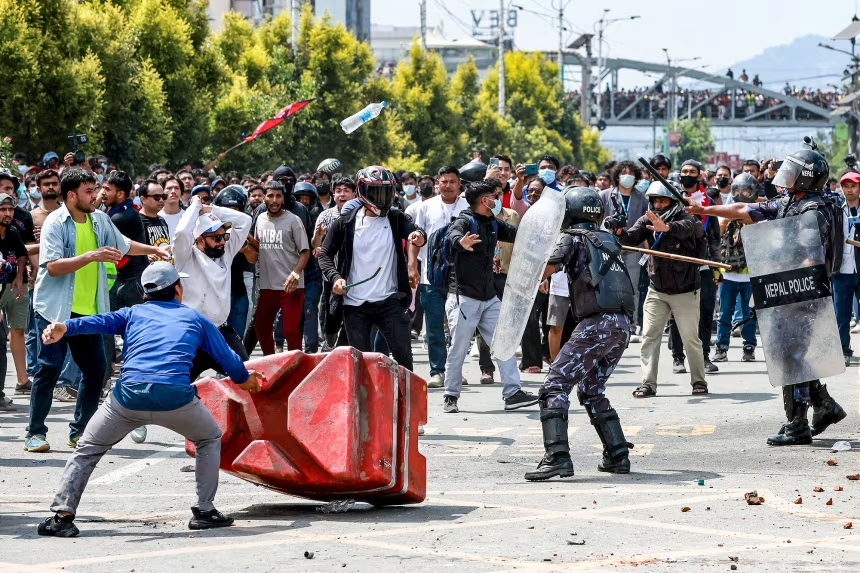
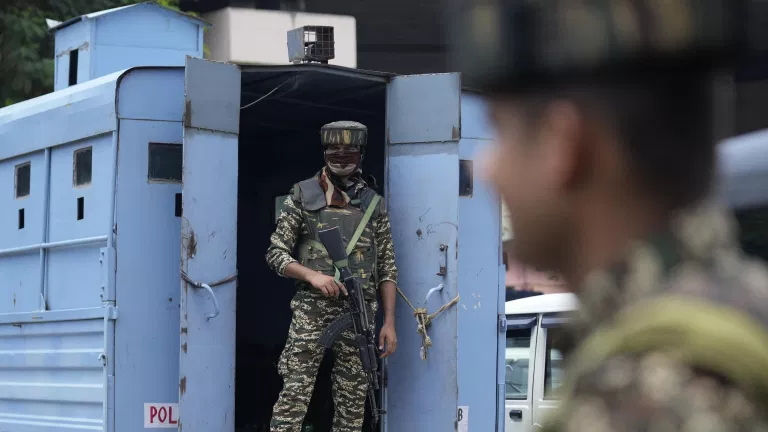
The Nepal Army confirmed on Wednesday that curfew restrictions would remain in place throughout the day and extend into Thursday, citing the tense situation across the country. The military had assumed control of security late on Tuesday night. In Kathmandu, visuals captured soldiers patrolling the capital as some locals attempted to continue their daily routine. Yet, the impact of Tuesday’s violent clashes was still visible, with thick smoke rising from the headquarters of a Nepali news channel. Key landmarks including the Parliament, Supreme Court, and other government structures suffered heavy damage during the agitation led by Gen Z demonstrators.
Earlier, Nepal Army Chief Ashok Raj Sigdel urged the protesters to hold talks. In his statement, he said, “We appeal to the protesting group to halt protest programmes and come forward for dialogue for a peaceful way out for the nation. We need to normalise the present difficult situation and protect our historical and national heritage and public as well as private property, and to ensure safety to the general public and diplomatic missions.”
The wave of violence intensified further as demonstrators set ablaze the homes of the former Prime Minister, former home minister, and other senior leaders.
Flight operations also suffered as airlines such as Air India, IndiGo, and SpiceJet cancelled services to Kathmandu. The Tribhuvan International Airport (TIA) was briefly shut after protesters attempted to storm the airport, forcing the Army to take control of the facility.
Why are people protesting in Nepal?
The widespread unrest in Nepal began after the government announced a ban on 26 social media platforms, including WhatsApp, Instagram, and YouTube. The decision, later rolled back, triggered massive outrage. The violent confrontations have so far claimed 19 lives and left more than 300 people injured. These deaths further fuelled anger, turning the protests into a massive anti-government movement.
The rising pressure eventually forced Prime Minister KP Sharma Oli to step down from office. Earlier, Oli claimed that “infiltration by various vested interest groups” was behind Monday’s violence. He had also pledged to create a probe committee to investigate the protests, in addition to promising financial aid for victims and free medical treatment for the injured.

 Aditya Didwaniya
 Akshay Didwaniya

 Mayur Mohta